





Dimasheq ـ News
Israel may believe that the current tense situation is sustainable, but Washington is frustrated by its potential repercussions for the Arab normalization process, military friction with Turkey, and near-term economic plans.
The prospects for more normal relations between Syria and Israel, even if they do not amount to a formal peace agreement, have been declining in recent months. It was therefore a positive development that Syrian and Israeli officials met in Paris on January 5 and 6 to discuss security arrangements.
The talks were mediated by U.S. officials. President Trump says he wants Israel to “get along” with Syria. But reconciling Israel’s post-October 7 security requirements with Syrian sovereignty following the fall of the Assad regime remains a challenge.
President Trump takes pride in his close relationship with Israel. However, in early December, he criticized Israeli military operations in southern Syria. After an Israeli strike on November 28 killed 13 Syrians, the president warned Israel in a post on Truth Social against activities that could “impede Syria’s development into a prosperous country.” This was not the first time Trump and his administration had criticized Israeli military operations in Syria. In July, after the Israeli Air Force bombed the Syrian Defense Ministry and a nearby target close to the presidential palace, senior administration officials accused Israeli Prime Minister Benjamin Netanyahu of having a “hair-trigger” approach. One White House official complained: “He bombs everything all the time. It could undermine what Trump is trying to do.”
A Shift in Syrian Rhetoric Toward Israel
Trump is not the only one frustrated by Israeli attacks inside Syria. Recently, Syrian President Ahmed al-Sharaa has also begun publicly expressing his dissatisfaction. During an interview in early December on the sidelines of the Doha Forum, al-Sharaa accused Israel of waging a “battle against ghosts.” He said that since coming to power, he had sent messages to Israel calling for peace and stability, but instead of embracing the new Syria, “Israel confronted us with extreme violence,” carrying out more than 1,000 airstrikes and around 400 incursions, while occupying areas of Syrian territory adjacent to the Golan Heights.
There is no doubt that the Doha Forum often features sharp rhetoric toward Israel. But al-Sharaa’s verbal attack marked a departure from his largely conciliatory approach toward Israel during his first year in power.
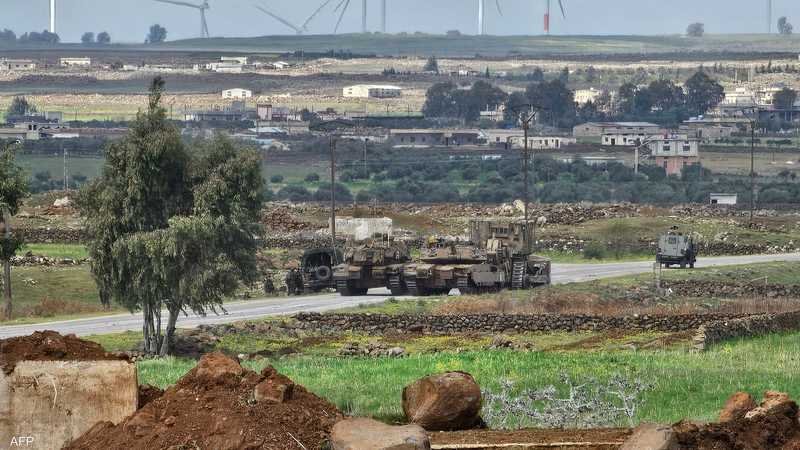
Syrian government institutions have increasingly echoed this tougher rhetoric. In November, the Syrian Foreign Ministry publicly condemned Netanyahu’s visit to Israeli forces deployed in the buffer zone between Israel and Syria, which had previously been monitored by United Nations peacekeepers. It described the visit as a “serious violation” of sovereignty and an attempt to impose a “fait accompli” on the border. At the same time, Syrian state media returned to referring to Israel, as it had in the past, as the “Zionist enemy.” This trend is hardly encouraging.
For most of the past year, al-Sharaa and his government sought to reassure Israel verbally that Damascus was not interested in conflict. Weeks after coming to power, he said he had “no intention of confronting Israel” and pledged not to “allow Syria to be used as a platform for attacks” against neighboring countries. The governor of Damascus expressed a similar position, saying: “Our problem is not with Israel,” adding: “We do not want to interfere in anything that could threaten Israel’s security.”
When asked about the prospects of normalization with Israel, al-Sharaa gave a negative response but did not completely close the door. He said: “We want peace with all parties,” but noted that there is “great sensitivity regarding the Israeli issue,” because the Israelis “occupy” the Golan Heights. Therefore, he said, “it is too early to discuss this matter.” Rather than normalization, al-Sharaa called for an Israeli withdrawal from the buffer zone established under the 1974 Disengagement Agreement and monitored by the United Nations, as well as from other areas adjacent to the Golan Heights border.
The new government in Damascus has maintained regular contacts with Israel. Last summer and fall, al-Sharaa repeatedly sent his foreign minister, Asaad al-Shaibani, to conduct direct negotiations on security arrangements with Ron Dermer, Israel’s minister of strategic affairs. More recently, al-Shaibani met in Paris with Israel’s ambassador to Washington, Yechiel Leiter, as well as the individual reportedly slated to head the Mossad.
Israeli Military Operations in Syria
Some Israeli military operations in Syria since the fall of Assad in December 2024 appear, at least, to have been justified. Israel’s decision to destroy Syrian weapons prevented them from falling into the hands of jihadists or other malign non-state actors. Israel’s initial deployment across the border also prevented a security vacuum from emerging on the Golan front during the chaotic days following al-Sharaa’s uprising.
The most defensible of Israel’s ongoing military operations in Syria are those aimed at containing Turkey’s growing influence in the country. Israel has targeted Turkish air-defense systems and missiles, whether deployed inside Syria or supplied to Damascus.
It may have been understandable for Israel to adopt a more forward-leaning military posture after October 7. This approach appears to be producing results in Lebanon, where Israel has dealt Hezbollah heavy blows and continues to target its personnel and assets, while seemingly pressuring Beirut to disarm the dangerous Iranian-backed militia.
Israel’s military intervention to protect Syria’s Druze community during the summer of 2025, however, appears less directly connected to Israeli national security. In 2018, Netanyahu chose not to intervene when the Islamic State attacked the predominantly Druze city of Suwayda, killing approximately 250 civilians. Last summer, however, Israel launched airstrikes against Syrian government forces after the same city was again attacked by Sunni Arab militias linked to the Syrian regime. Reports indicate that Israel is now arming Druze forces in Suwayda province.
The Ambiguity of Israel’s Strategy
It is difficult to determine Israel’s long-term strategy. It may be legitimate to question al-Sharaa, who was formerly a member of al-Qaeda. But it is unclear what Israel hopes to achieve through its military approach. Israel has drawn a red line against the introduction of advanced Turkish systems into Syria, but efforts to establish a new security arrangement along the border with Damascus have yet to bear fruit.
Syria is a key component of a regional coalition aimed at containing Iranian influence. Al-Sharaa’s government routinely intercepts weapons shipments sent by Iran and Iranian-backed Iraqi militias to Hezbollah in Lebanon. More recently, on December 17, Syrian forces ambushed smugglers attempting to resupply Hezbollah with dozens of rocket-propelled munitions.
Israel may believe that the tense status quo in Syria is sustainable, but the Trump administration appears to disagree. American hopes for normalization between Israel and Syria and for Syria to join the Abraham Accords appear premature, but Israel’s current position also seems to be preventing even a non-aggression agreement.
Netanyahu may not yet realize it, but Trump and his Arab partners in Riyadh and Abu Dhabi are investing in Syria’s success. Israel may have a free hand in Lebanon, but that will not remain the case indefinitely in Syria. Jerusalem’s approach is also shaping regional perceptions. Arab states view intensive Israeli military activity in Syria as a destabilizing factor, and this perception will not help strengthen Israel’s integration into the region.
For Washington, the most urgent issue is the escalating tension between Israel and Turkey. U.S. mediation will be necessary to negotiate rules preventing Syria from becoming an arena for a Turkish-Israeli conflict. The United States should also continue to promote communication between Damascus and Jerusalem to reach a practical understanding along the Golan front.
The near-term goal is for Syria to move from being a hostile neighbor of Israel to becoming a more neutral neighbor. For Jerusalem, in the absence of Damascus’s agreement to Israeli demands for a demilitarized zone in southern Syria, concessions may be necessary to reach an agreement with the new Syria.
David Schenker is the Taube Senior Fellow at the Washington Institute and director of the Institute’s Rubin Program on Arab Politics. This article was originally published on the Jerusalem Strategic Tribune website.