


Dimasheq
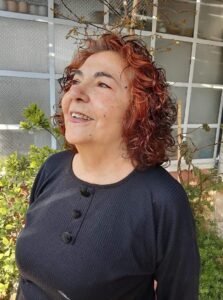
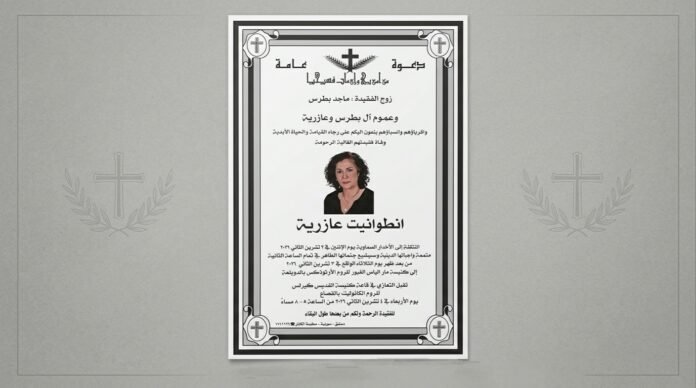
Syrian film editor Antoinette Azaria passed away on Monday, November 2, in Damascus, at the age of 76, following a long battle with heart disease. Her artistic career spanned nearly five decades, during which she contributed to the production of some of the most prominent films in the history of Syrian cinema.
Azaria was considered one of the leading figures in film editing in Syria and the Arab world. She left her mark on numerous cinematic works that received recognition and acclaim at Arab and international film festivals. Throughout her career, she received several awards and honors in recognition of her artistic contributions.
Born in Aleppo, Azaria studied cinema in Cairo, graduating from the Film Editing Department at the Higher Institute of Cinema in 1976. She returned to Damascus the following year and joined the General Organization for Cinema in 1977, marking the beginning of a professional career that would see her work on numerous notable films.
Azaria received three specialized awards throughout her career. The first came in 1976 for the Egyptian film “A Tale of What Happened in the City of Yes.” The second followed in 1988 for her editing of the Syrian film “Stars of Broad Daylight” at the Carthage Film Festival. In 1996, she received her third award for the film “Al-Lajat” at the Alexandria International Film Festival.
She was also honored by the Damascus International Film Festival in 1995 for her overall body of work, and received recognition from the Syrian Artists Syndicate in 1999 in appreciation of her career and contributions to cinema.
The films she edited included several well-known works, such as “Stars of Broad Daylight,” “Jackal Nights,” “Al-Tahaleb,” “Verbal Messages,” “The Journey,” and “Al-Lajat.” She also ventured into directing with the short film “Children Are Not Always Foolish,” adapted from a story by Moroccan writer Mohamed Choukri.
Azaria’s experience extended beyond artistic production into academia and the transfer of professional expertise to younger generations. In 2020, she joined a group of Syrian filmmakers and artists in launching the Cinema and Theatre Department at the Arab International University, which introduced academic studies in film directing in Syria. She also taught acting at a private university in Damascus.
With the passing of Antoinette Azaria, Syrian cinema loses one of the distinguished artists who helped shape its visual identity through a body of work spanning decades and closely associated with significant milestones in the history of Syrian film production.