





Dimasheq
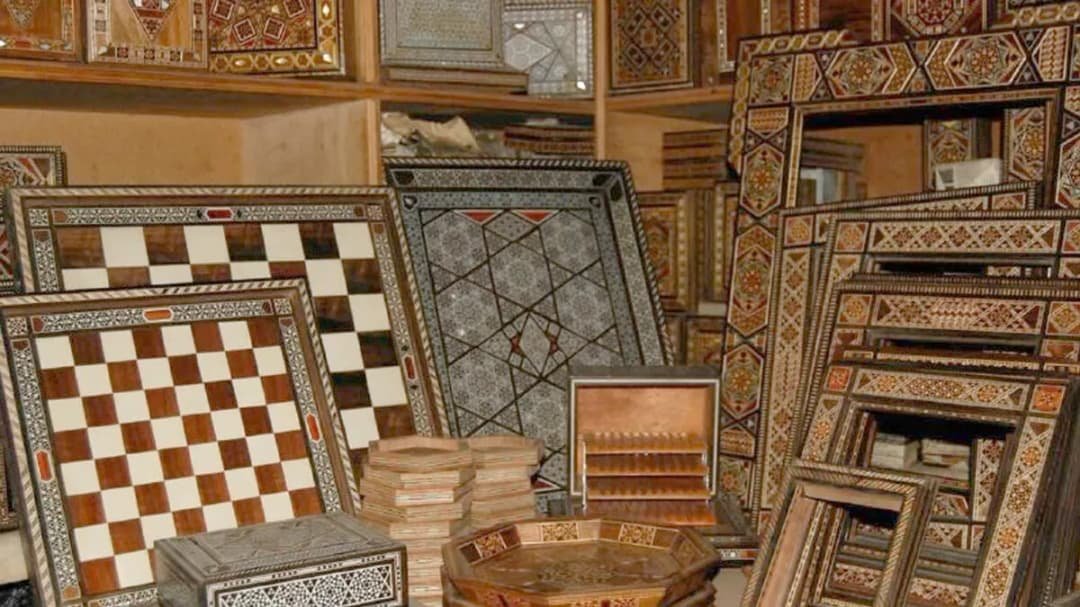
Damascene mosaic is considered one of the most distinguished traditional handicrafts associated with the city of Damascus. For more than a century and a half, it has formed an integral part of the city’s cultural and civilizational identity. This remarkable art is renowned for its unique beauty and intricate craftsmanship, relying on the inlaying of natural woods—particularly walnut, lemon, and olive wood—arranged in elaborate geometric and decorative patterns that reflect the skill, creativity, and inherited expertise of Damascene artisans.
The origins of Damascene mosaic date back to 1860, when the craft began to flourish in the traditional workshops of Old Damascus. Over time, it evolved into one of the most prominent symbols of Syrian heritage. Artisans have successfully preserved the authenticity of this craft while continuously refining its techniques, relying on meticulous handwork that requires years of training and experience.
Damascene mosaic is more than a traditional craft; it is a cultural and artistic legacy that embodies the spirit of Damascus and the richness of its history. Its creations adorn homes, palaces, and traditional reception halls, while its products enjoy widespread appreciation both within Syria and abroad for their exceptional artistic and heritage value.
Today, Damascene mosaic continues to stand as a living testament to the richness of Syrian artistic heritage and a symbol of authenticity, creativity, and master craftsmanship. It demonstrates the enduring ability of Damascene heritage to survive, evolve, and pass its cultural message from one generation to the next.