


Dimasheq
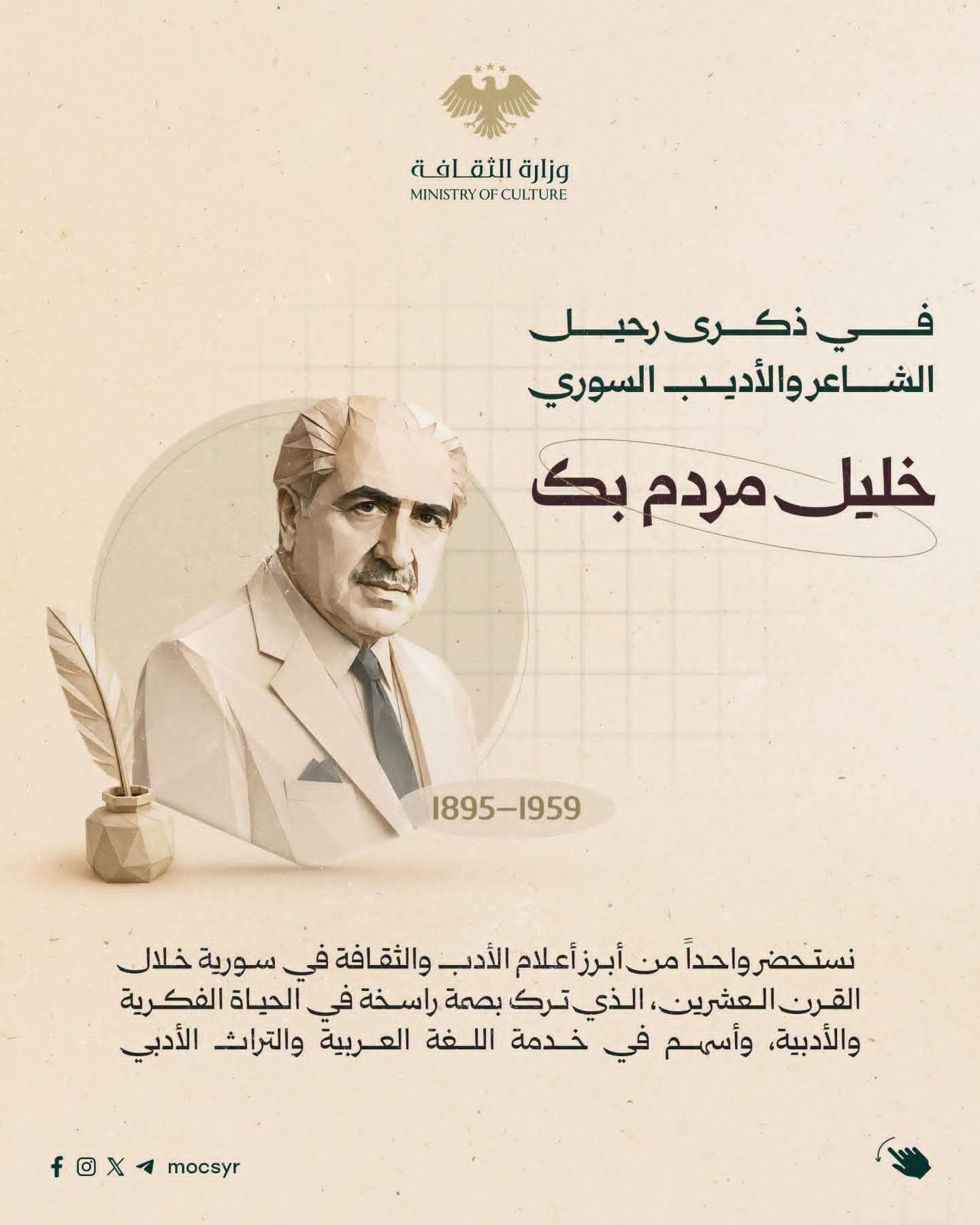
On the anniversary of the passing of Syrian poet and literary figure Khalil Mardam Beyk, cultural circles commemorate one of the most prominent intellectual and literary pioneers who helped establish the standing of Syrian and Arab culture during the first half of the twentieth century. Mardam Beyk, who passed away in 1959, left behind a rich legacy that combined poetry, literary scholarship, and service to the Arabic language, while also playing an influential role in cultural and academic institutions.
Born in Damascus in 1895, Khalil Mardam Beyk grew up in an intellectual and cultural environment that nurtured his literary talent from an early age. He became renowned as an accomplished poet and distinguished scholar and is best known for writing the lyrics of the Syrian national anthem, “Humat al-Diyar” (Guardians of the Homeland), which has become an enduring national symbol representing patriotism, dignity, and national identity.
Beyond his poetic achievements, Mardam Beyk made significant contributions to the editing and study of Arab literary heritage. He enriched the Arab library with numerous books and scholarly works exploring Arabic poetry, its history, and its leading figures. He was also recognized for his efforts to preserve Arab cultural identity and promote the status of the Arabic language.
Mardam Beyk served as Secretary-General of the Arab Academy of Damascus before later becoming its President. In this capacity, he played a pivotal role in supporting scientific and literary activities, encouraging research and authorship, and advancing Syria’s cultural and academic institutions.
Today, Khalil Mardam Beyk’s legacy continues to occupy a distinguished place in Syrian and Arab cultural memory as one of the leading figures of the modern Arab literary renaissance. His lasting contributions to poetry, scholarship, and the Arabic language remain an enduring example of an intellectual who successfully combined literary creativity with national cultural service.