


By: Tamer Al-Zaghari
Dimasheq – Follow-ups – Social Media
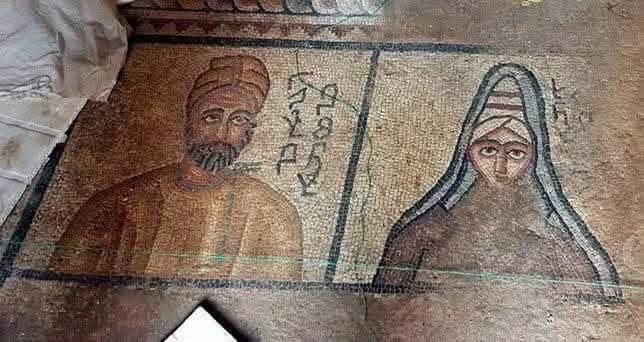
Arabs inhabited Syria and Anatolia more than 600 years before the Islamic conquest. The tomb was discovered in the Turkish city of Şanlıurfa (ancient Edessa).
Turkish researchers have reportedly succeeded in locating the tomb of King Abgar in the city of Şanlıurfa, formerly known as Edessa. The city was historically part of northern Syria before being incorporated into modern Turkey following the borders established in the Sykes–Picot era. The article describes the area as historically, socially, and culturally Arab.
King Abgar, who died in 50 CE, is regarded by many historians as one of the first rulers to embrace the divine message preached by the Prophet Jesus, son of Mary (peace be upon him). The article argues that some historical narratives have sought to deny the Arab identity of this land by attributing King Abgar to the Armenians. It presents the following points in support of his Arab Nabataean identity:
1. The German orientalist Theodor Nöldeke stated that “Kingdom of Arabaya” was the official name of the kingdom ruled by King Abgar.
2. The Roman historian Pliny the Elder, writing in the first century CE, stated: “The inhabitants of Edessa are Arabs.”
3. The French historian Maxime Rodinson identified King Abgar and his royal dynasty as being of Arab Nabataean origin, a view also supported by Alan Bowman, Fred Skolnik, John Morris, and Siegfried J. de Laet.
4. Stephen Ring noted that “King of the Arabs” was the official title of King Abgar.
Sources:
1. History of the World – John Morris
2. The Cambridge Ancient History – Alan Bowman
3. History of Humanity: From the Seventh Century BC to the Seventh Century AD – Siegfried J. de Laet
4. History of Syriac Texts and Syrian Christianity – Stephen Ring
5. Classical Philology – H. MacAdam
6. The Arabs – Maxime Rodinson
7. Between Rome and Persia: The Middle Euphrates, Mesopotamia, and Pa
lmyra Under Roman Control – Peter Edwell