

Dimasheq
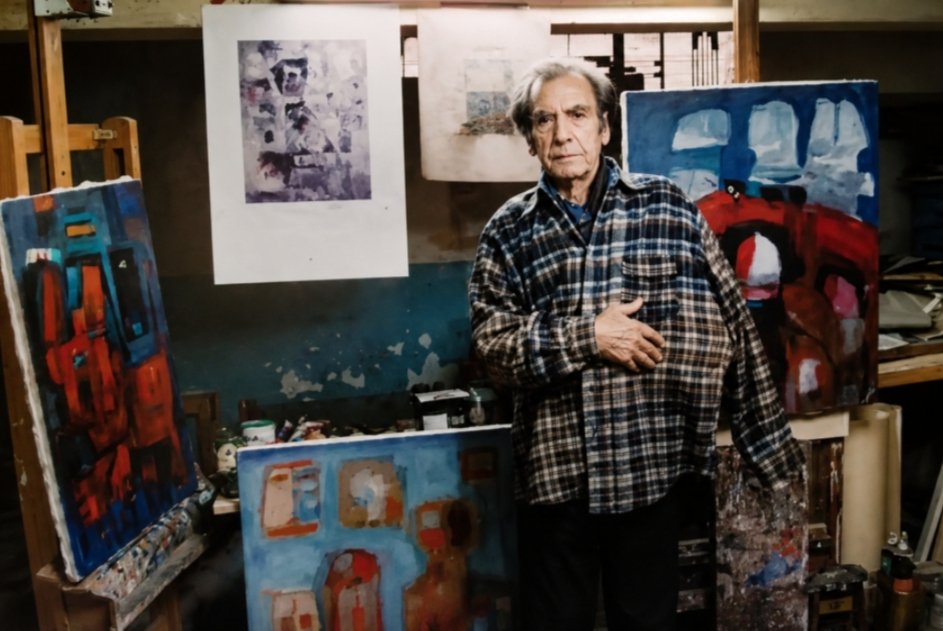
In a step aimed at preserving Syria’s artistic heritage and safeguarding the legacy of its pioneering artists, Minister of Culture Mohammad Yassin Al-Saleh has issued a decision to rehabilitate the studio of the late Syrian painter Fateh Moudarres in Damascus, coinciding with the anniversary of his passing. The initiative forms part of a national project titled “Restoring Syria’s Fine Arts Memory.”
Implemented in cooperation with the Damascus Foundation for Culture, Thought, Arts and Development, under the supervision of visual artist Khaled Al-Attar, the project seeks to preserve artists’ studios, collections, and creative spaces associated with Syria’s most prominent painters. These spaces are regarded as an integral part of the nation’s cultural memory and will be transformed into vibrant venues for documentation, exhibitions, research, and artistic and cultural activities, helping safeguard Syria’s artistic heritage and make it accessible to future generations.
Moudarres’ Studio: A Landmark of Syria’s Cultural Memory
In a statement to SANA, Minister Al-Saleh said the Ministry views Syria’s visual arts movement as “a vital artery of refined social awareness and a testament to Syria’s cultural presence in the world.” He stressed that strengthening this form of soft power begins by restoring neglected cultural landmarks that had been marginalized for decades by the former regime despite their resilience and their contribution to shaping public consciousness.
He added: “The late artist Fateh Moudarres is one of those outstanding figures, and his studio is a landmark of our cultural memory. During this phase of cultural reconstruction, the Ministry of Culture is committed to honoring the legacy of our pioneering artists, ensuring their influence remains alive among new generations of creators, and preventing their achievements from fading into oblivion. This marks the first step in our strategy to support Syria’s visual arts movement in all its schools and artistic directions.”
A Studio That Served as an Alternative Academy
Visual artist Khaled Al-Attar, a member of the Damascus Foundation for Culture, Thought, Arts and Development, noted that Moudarres’ studio, located in Al-Najmeh Square in Damascus’ Al-Shaalan district, functioned for nearly five decades as an artistic academy parallel to the Faculty of Fine Arts. It nurtured many distinguished artists who enriched Syria’s visual arts movement.
Al-Attar explained that after returning to Syria following an eleven-year exile, one of his highest priorities was to revive this historic artistic space so it could once again provide young artists with an environment to express and develop their creative potential.
He added: “Our foundation is committed to supporting cultural and artistic activity, and the Ministry of Culture’s endorsement of this proposal has been a major motivation. We hope this initiative will eventually expand to include the studios and workshops of many of Syria’s leading artists.”
Memorandum to Protect the Legacy of Syrian Art Icons
For his part, visual artist Issam Darwish, Director of Fateh Moudarres Studio Gallery, said the studio, established in 1967, is one of Syria’s most renowned artistic workshops and belongs to one of the country’s most influential artistic and intellectual figures.
He explained that after Moudarres’ death in 1999, the studio reopened the following year under the joint management of his wife, Shukran Al-Imam, enabling it to continue preserving his artistic legacy, showcasing contemporary Syrian art, and supporting emerging artists through exhibitions and cultural initiatives.
Darwish described the memorandum of understanding signed with the Damascus Foundation for Culture, Thought, Arts and Development, with the support of the Ministry of Culture, as an important step toward preserving the legacy of Fateh Moudarres, one of Syria’s foremost pioneers of modern art.
A Legacy That Endures
Fateh Moudarres (1922–1999) is widely regarded as one of the leading pioneers of modern Syrian and Arab art and among the founders of Syria’s contemporary visual arts movement. He studied at the Academy of Fine Arts in Rome and later at the École Nationale Supérieure des Beaux-Arts in Paris. He served as a professor at the Faculty of Fine Arts at the University of Damascus, where he mentored generations of artists. He also played a key role in establishing the Syrian Fine Arts Syndicate and shaping the foundations of modern Syrian visual art.
His works are distinguished by a unique artistic language that combines expressive abstraction with symbolism, drawing inspiration from the Syrian people, landscape, history, and mythology. His paintings gained wide recognition across the Arab world and internationally and are housed in prominent museums and art institutions. Although he passed away in 1999, his artistic legacy and his Damascus studio remain enduring symbols of one of the most influential experiences in the history of modern Syrian visual art.