
Dimasheq – News | Haneen Kharsa
Senior researcher at the Al Jazeera Centre for Studies, Dr. Liqaa Makki, and Syria’s Minister of Culture, Mohammad Yassin Al-Saleh, said in exclusive statements to the Damascus News Platform that the new Syria possesses the necessary foundations to restore its pivotal role at both the regional and cultural levels amid a period of rapid transformation. They stressed that the success of this phase depends on maintaining stability, strengthening public awareness, and building a comprehensive national project.
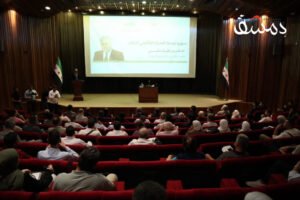
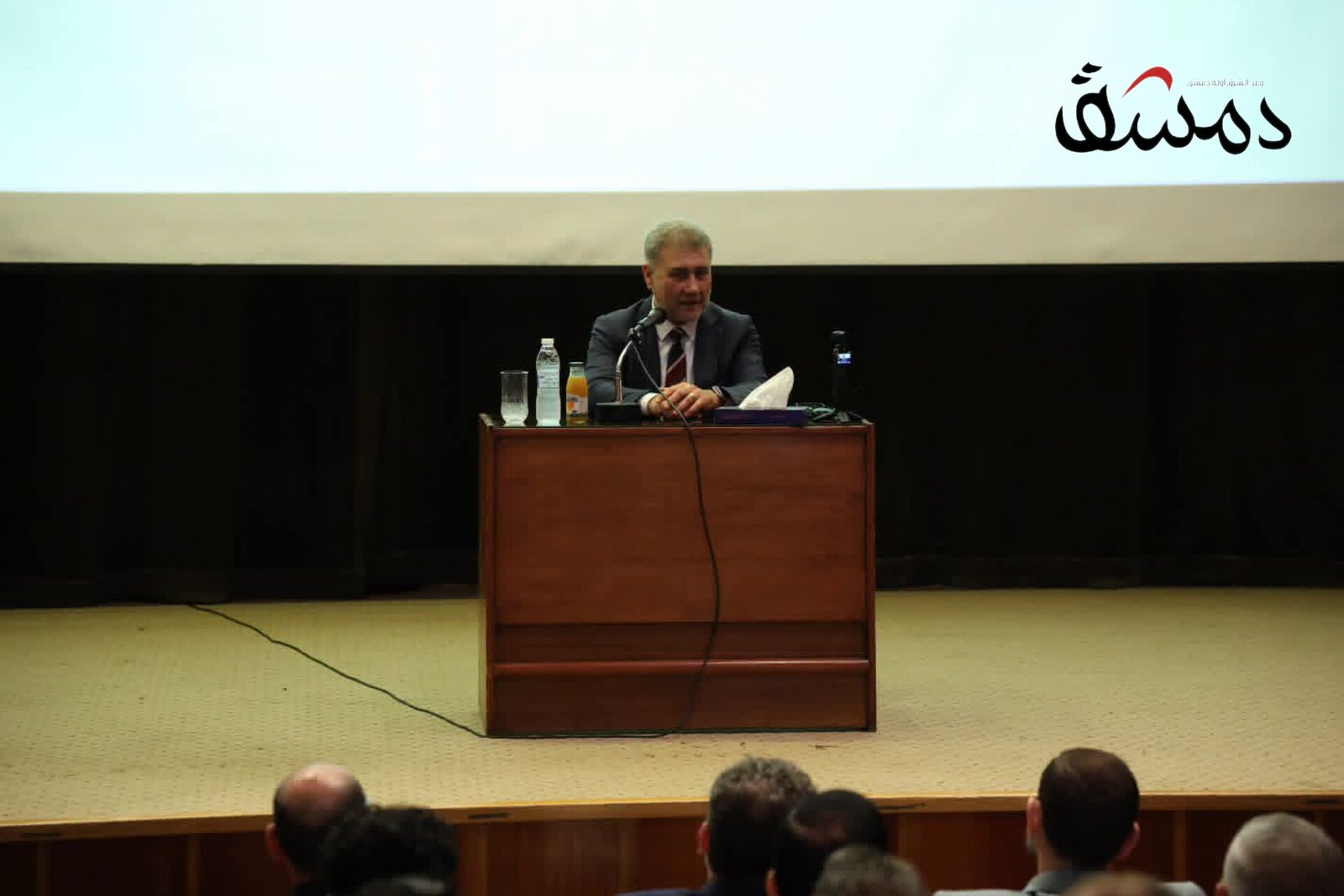
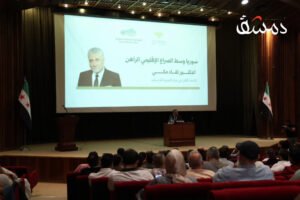
Their remarks came on the sidelines of a lecture titled “Syria Amid the Current Regional Conflict,” organized by the Ministry of Culture at the Syrian National Library as part of its cultural activities aimed at raising public awareness of the current stage and discussing Syria’s position within the regional landscape and the implications of ongoing developments across the region.
Dr. Makki emphasized that Syria occupies a strategic geopolitical position in the Middle East, noting that the country has so far succeeded in remaining outside the direct military repercussions of the regional conflict. According to him, this reflects the state’s ability to preserve stability and shield the country from conflicts that could hinder development efforts and the process of unifying its institutions.
He explained that the regional landscape remains open to multiple possibilities and that Syria’s continued distance from the direct consequences of the conflict will depend on future regional developments. He pointed out that the country has recently made significant progress in national reunification, strengthening its foreign relations, and securing the lifting of sanctions, creating new opportunities for the next phase.
Makki added that Syria’s geographical, historical, and political position makes it a key player in regional dynamics, expressing confidence in the country’s ability to overcome current challenges and capitalize on the opportunities arising from regional transformations while addressing potential risks.
During the lecture, Makki reviewed the major developments that have shaped the current regional landscape and altered regional and international balances of power. He stressed that economic and strategic projects—particularly regional trade corridors—have become influential factors in shaping policies and alliances, with economics now serving as a primary driver of geopolitical competition. He also underscored that ending the influence of armed groups operating outside state authority is one of the key developments reshaping the regional order, highlighting the importance of understanding historical and geopolitical transformations to assess Syria’s future role.
Makki further stated that Syria is well positioned to become a “driving force of regional transformation” in the coming period, explaining that any regional changes will inevitably affect countries such as Iraq and Lebanon because of Syria’s central geopolitical position. He stressed that Syria cannot be excluded from any process of regional transformation or cooperation, although achieving this role will depend on regional stability.
Regarding the main risks facing Syria’s new experience, Makki said that challenges stem from both internal and external sources. He argued that opponents of the revolution continue to seek its failure and stressed that protecting its achievements is primarily the responsibility of society. “It is the people, not the military, who safeguard the revolution, because it is the greatest historic achievement since Syria’s independence,” he said.
Makki also noted that the strong turnout at cultural events, particularly among young people, reflects the vitality of Syrian society and its commitment to knowledge despite the difficult circumstances the country has endured.
For his part, Minister of Culture Mohammad Yassin Al-Saleh said that the ministry is working to strengthen cultural diplomacy and expand bridges of cooperation with the region and the wider world in order to present the image of the new Syria as a center for culture, knowledge, and creativity.
“The new Syria is a place of beauty, a place of culture, a place of knowledge, and also a place that exports solutions,” Al-Saleh said. He added that the country is moving toward building a comprehensive national project based on consolidating national identity, the rule of law, and the values of citizenship and justice.
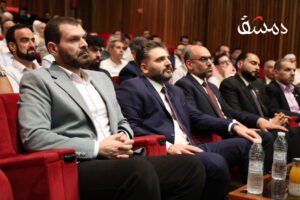
The minister also noted that the Ministry of Culture is committed to organizing lectures and intellectual events at the National Library. He said the high level of attendance—even during holidays and throughout the summer—demonstrates Syrians’ eagerness to participate in the country’s cultural and intellectual revival and reflects renewed appreciation for the nation’s thinkers and professionals, whose contributions have gained recognition locally, regionally, and internationally after years of marginalization.
The lecture concluded with an emphasis that restoring Syria’s regional and cultural role requires joint efforts by state institutions and society alike in order to strengthen the country’s participation in regional cooperation initiatives and lay the foundations for a new phase built on stability, culture, knowledge, and sustainable development.