





Dimasheq
Minister of Communications and Information Technology, Mr. Abdulsalam Haykal, announced the publication of the draft “Syrian Telecommunications Code for Buildings” for public consultation, in a step aimed at regulating telecommunications infrastructure inside buildings and incorporating it into Syria’s building code framework for the first time.
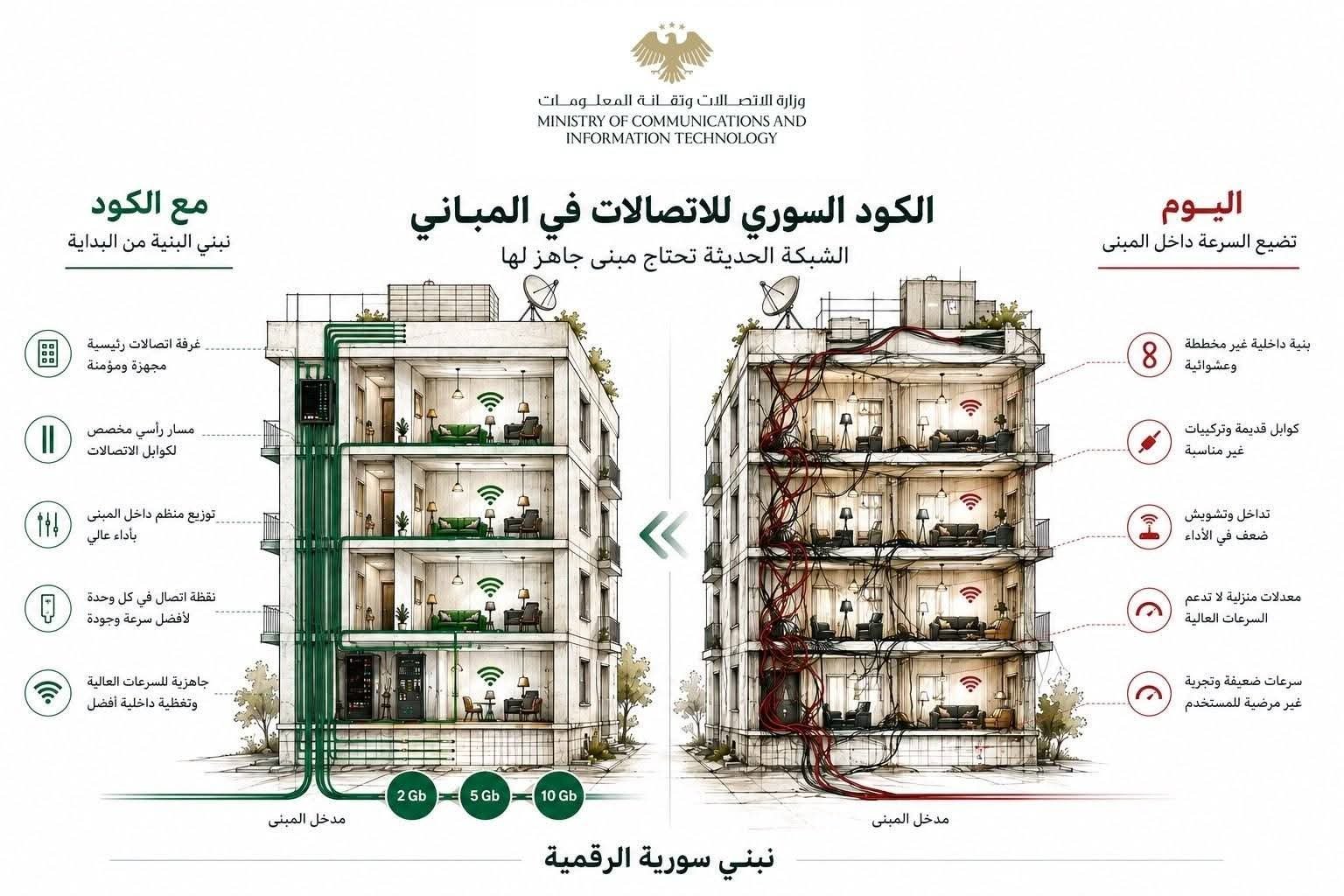
Minister Haykal explained that the preparation of the code comes as part of efforts to develop digital infrastructure and prepare buildings and facilities to keep pace with the rapid advancement of telecommunications technologies. The aim is to ensure that buildings can accommodate high speeds and capacities while reducing the need for costly modifications in the future.
According to the ministry, the code establishes clear standards and requirements for equipping buildings with the infrastructure necessary for telecommunications services, including requirements for cabling, equipment, and designated spaces, in line with the needs of modern telecommunications networks and the development of digital services.
Haykal stressed that adopting these standards would contribute to improving the quality of telecommunications and internet services, enhancing the readiness of buildings to accommodate modern technologies, improving the efficiency of infrastructure projects, and reducing the disorder and costs associated with rehabilitating networks inside buildings after their construction.
The minister noted that the code is not limited to regulatory and technical aspects, but also opens up broad opportunities for employment, investment, and the development of services related to telecommunications infrastructure by creating a clearer environment for companies and entities operating in the sector.
The publication of the draft for public consultation is intended to provide specialists, relevant authorities, engineers, investors, and experts with an opportunity to submit their comments and proposals before the procedures for approving the code are completed and it is incorporated into the officially adopted regulatory frameworks.
The move is viewed as part of a broader process to modernize the legislative and regulatory environment of Syria’s telecommunications sector and to link building and urban-planning requirements with the growing digital transformation, thereby preparing the necessary infrastructure for the expansion of telecommunications, internet services, and digital solutions in thecoming phase.