

Dimasheq – Exclusive
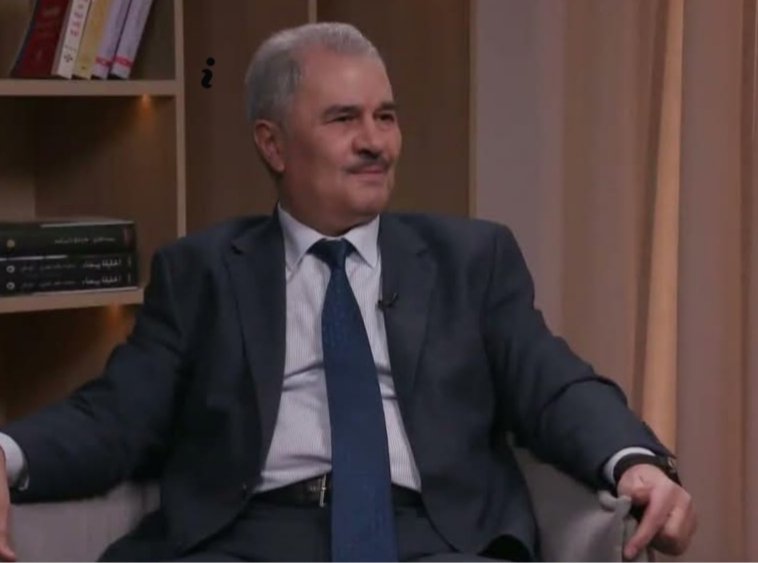
Russian affairs researcher Dr. Mahmoud Al-Hamza told Dimasheq that Russia has lost a significant part of its political and military influence in Syria following the fall of Bashar al-Assad’s regime. He said that previous Russian policy relied heavily on backing Assad, without developing political alternatives that would have enabled Moscow to preserve its influence if the internal balance changed.
Al-Hamza explained that, following Assad’s fall, Moscow found itself facing a new political reality that deprived it of an important part of its political and military leverage in Syria. However, he said, Russia has begun dealing with the new Syrian government in a more realistic and pragmatic manner, recognizing that the new Syria is a sovereign state and that the coming phase does not allow for interference in its internal affairs.
The researcher noted that the Russian leadership may not explicitly acknowledge the loss of its previous influence in Syria, but that this has nevertheless become clear, in his political and military assessment. He pointed out that the new Syrian government would not be prepared to give Moscow an opportunity to restore a military presence in the form it had maintained over the past years.
According to his assessment, Syria’s approach is focused on fully restoring sovereignty over its territory, ending forms of foreign military influence, and ensuring that weapons remain under the control of state institutions. He stressed that Damascus is not obliged to provide Moscow with guarantees regarding the continuation of its military presence.
Arrangements Allowing Moscow to “Save Face”
Regarding the Russian presence in Syria, Al-Hamza said that the Syrian leadership had chosen an approach based on understanding and gradual steps rather than demanding that Moscow immediately withdraw from its military bases and facilities.
He said that forcing Russian forces to leave abruptly and giving them a short deadline to withdraw from Syrian territory could have had a negative political and symbolic impact on the Russian leadership. In his view, the current arrangements allow Moscow to preserve a degree of “face,” while at the same time enabling Syria to restore sovereignty over its territory and facilities.
He noted the possibility of additional undisclosed arrangements between the two sides, potentially covering intelligence and security fields, as well as economic interests related to ports. He also pointed to the possibility of reaching new agreements in the future in the economic and industrial sectors, and possibly in the military and security fields.
Al-Hamza expected Syria and Russia to conclude new agreements in the coming months, particularly if the current memorandum of understanding is implemented on the basis of mutual respect for sovereignty and shared interests. He said that cooperation with Moscow does not conflict with the independence of Syrian decision-making as long as it is based on these principles.
Tartus and Hmeimim Moving Toward Syrian Control
The Russian affairs researcher described the memorandum of understanding between Damascus and Moscow as serious in nature, citing the existence of a timetable for implementing its provisions.
According to the information on which he bases his assessment, the agreement includes the transfer of the civilian sections of the Port of Tartus, including the commercial quay, to Syrian administration within a period not exceeding three months.
Al-Hamza also discussed arrangements concerning the Port of Latakia and Hmeimim Air Base, explaining that the facilities would be under Syrian control, while Russian military equipment would remain inside Hmeimim Air Base, which would be transformed into a training and qualification center.
According to Al-Hamza, the proposed center would have a training, professional, and military-educational character, with joint Syrian-Russian management and without military or operational missions. He said its primary purpose could be to make use of the military equipment located at the base to train Syrian personnel in its operation.
Has Russia’s Military Role in Syria Come to an End?
Al-Hamza said that, at the strategic and geopolitical levels, Moscow has lost an important part of its position in the Middle East, particularly in Syria, which had represented an important launching point for Russia toward other areas in Africa.
He explained that the Russian presence in Syria had enabled Moscow, in his assessment, to provide support to its allies in Libya, Sudan, and other parts of the African continent. He also referred to the activities of the Wagner Group and the role played by Russian bases in Syria in supporting those activities.
He argued that this strategic advantage has ended with the new arrangements and that Russia has lost the ability to use Syrian territory as a launching point for external military operations, describing this as a major strategic and geopolitical loss for Moscow.
At the same time, Al-Hamza described the new understandings between Damascus and Moscow as positive for both sides and potentially beneficial to regional stability. In his view, they demonstrate Russia’s willingness to deal with Syria on the basis of balance and mutual respect, while Syria is seeking to avoid confrontations and hostilities with other countries.
The Russian affairs researcher concluded his remarks to Dimasheq by saying that resolving disputes between states through dialogue, understanding, and shared interests is the best path toward achieving security and stability. He expected Russia’s military presence in Syria in its previous form to have come to an end, while cooperation between the two countries could continue in other areas under new arrangements.