




Dimasheq
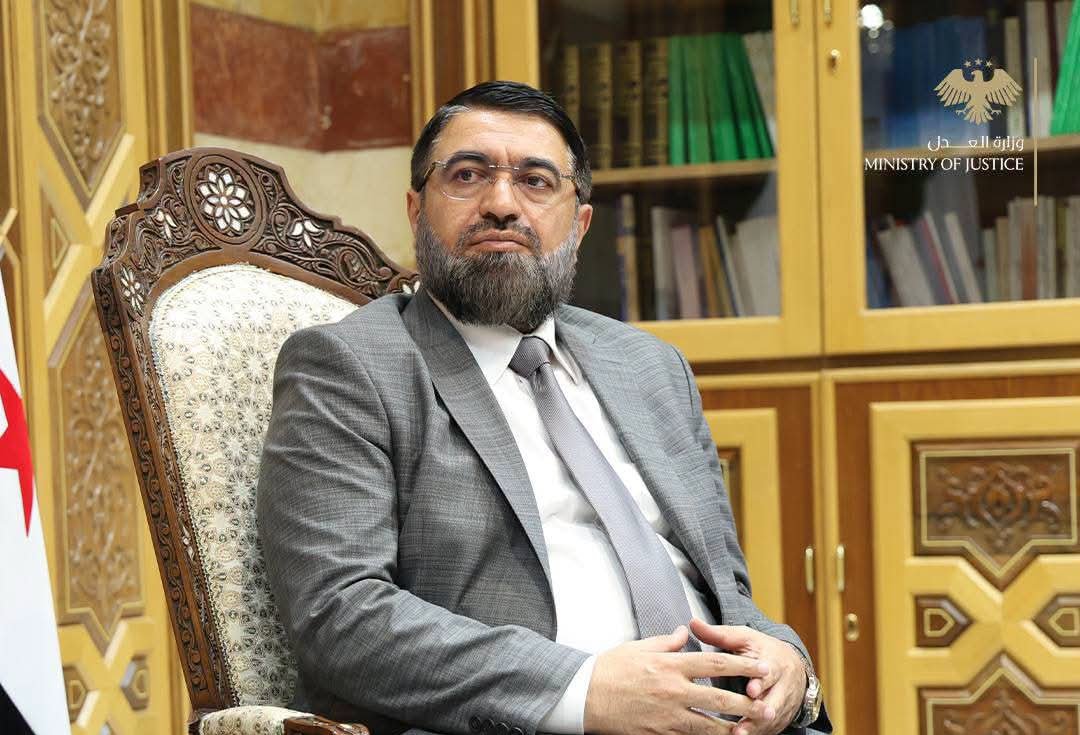
Syrian Justice Minister Mazhar Al-Wais said that the mission of the Ministry of Justice and the Judicial Council is to overcome obstacles and provide all requirements for achieving justice, calling for confidence in the judicial process and for seeking recourse to the competent judicial institutions to obtain rights.
Al-Wais explained that the rulings issued today came after a series of legal and judicial procedures, noting that the ruling will be referred to the Court of Cassation, the highest court in Syria, to review it and make the final decision.
He added that the Court of Cassation will conduct the necessary deliberations among its members before issuing its final decision, stressing that it is not bound by a specific time limit for reaching a decision in the case.
The Justice Minister noted that the execution of a death sentence requires the completion of all stages of appeal, review, and ratification stipulated by law, pointing out that the ruling does not become enforceable until all legally prescribed procedures have been exhausted.
In a related context, Al-Wais stressed that the transitional justice process in Syria must begin with ensuring justice for victims and preventing impunity. He explained that the court relied on legal characterizations based on international humanitarian law as part of efforts to achieve justice for victims and hold those responsible for grave crimes accountable.
In a statement to Al-Ikhbariya, the Justice Minister said that death sentences under Syrian law constitute a sovereign matter and do not conflict with international law, stressing that their application is subject to the procedures and safeguards stipulated by Syrian law.