





Dimasheq
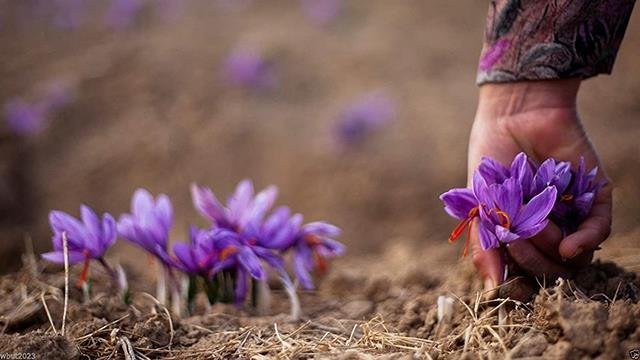
The Palmyra Oasis in the eastern countryside of Homs has witnessed the blooming of its first saffron flower, marking a first-of-its-kind development in the area. The milestone comes as part of an experimental project aimed at introducing saffron cultivation, developing its production and propagation, and opening up opportunities to diversify agricultural output and strengthen investment prospects in the oasis.
The project is being implemented in cooperation between Tadmoruna Association and Al-Najat Charity Association, with the participation of a number of local farmers from Palmyra. It involves an integrated programme that includes training in saffron cultivation techniques, propagation stages and plant care, alongside field supervision by experts and researchers specialising in agricultural development.
The project aims to assess the suitability of the environmental and climatic conditions in the Palmyra Oasis for saffron cultivation and evaluate the potential for expanding production in the coming stages, should the experiment prove successful and deliver promising agricultural and economic results.
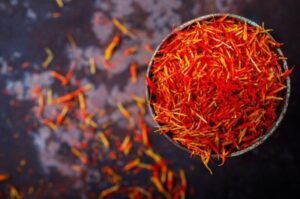
Saffron is considered a high-value agricultural crop due to its diverse applications in the food, medical and cosmetic industries, as well as its high market value. These qualities make it a promising option for diversifying agricultural crops and creating additional sources of income for farmers.
This experiment forms part of broader efforts to revitalise the agricultural sector in Palmyra and make use of the potential offered by the oasis through introducing new crops and developing local expertise, potentially contributing to improved livelihoods and stronger economic activity in the region.