




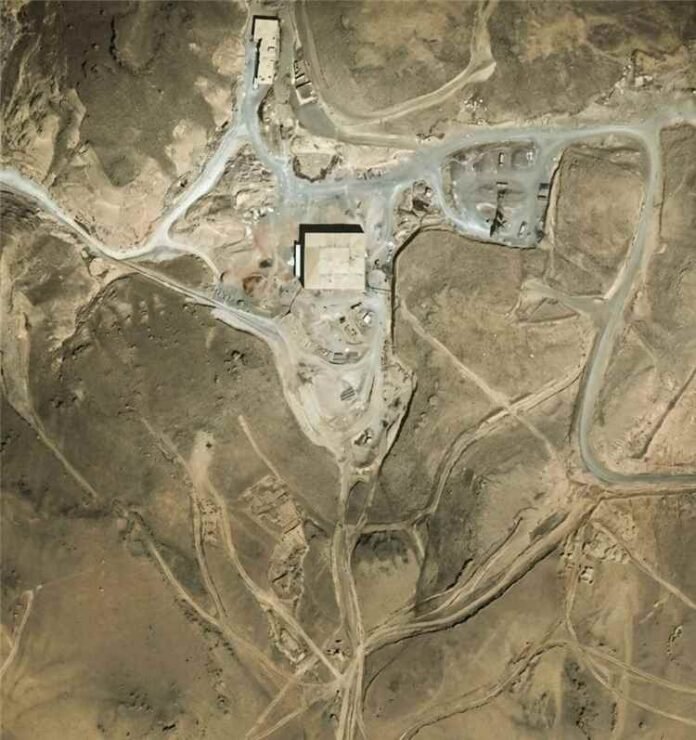

A Report Reveals the Location of a Facility Linked to the Syrian Nuclear Program Near Damascus
Dimasheq News
The Institute for Science and International Security (ISIS) has revealed the location of a facility linked to the Al-Kibar nuclear reactor in Deir ez-Zor, stating that the facility is located in the Marj Al-Sultan area of Eastern Ghouta, near Damascus, and was intended to produce nuclear fuel for use in the reactor.
The information was included in a report published by the institute following recent developments concerning Syria’s nuclear activities, after the International Atomic Energy Agency (IAEA) conducted verification activities at several sites linked to the Al-Kibar reactor and its supporting facilities.
In a report issued in early September 2026, the IAEA confirmed that the Al-Kibar site in the Deir ez-Zor countryside contained a nuclear reactor under construction before it was bombed by Israel in 2007. Excavation work at the site revealed cooling infrastructure consistent with the design of a gas-cooled, graphite-moderated reactor.
The Institute for Science and International Security stated that the latest developments have helped clarify aspects of Syria’s previous nuclear activities, including the reactor, the fuel fabrication facility, and sites associated with uranium storage and waste.
The Marj Al-Sultan Facility
According to the report, one of the facilities visited by the IAEA team matches a building located in Marj Al-Sultan that had previously been linked in earlier reports to the production of nuclear fuel for the Al-Kibar reactor.
The institute reported that uranium conversion, fuel fabrication, and reactor fuel cladding operations were carried out at the same site. It also referred to previously published interior photographs of the facility showing equipment being installed in 2005, consistent with machinery designed to convert uranium ore concentrate into uranium tetrafluoride.
The information presented in the report indicates that the Al-Kibar reactor used a gas-cooling system and graphite as a moderator, with an estimated thermal capacity ranging between 20 and 25 megawatts. The institute compared its design to the Yongbyon reactor in North Korea.
Dozens of Tons of Uranium
The report also revealed another site declared by Syria to the IAEA, which contained approximately 73 tonnes of natural uranium metal.
The material was distributed between around 55 tonnes manufactured into 8,808 fuel rods and approximately 18 tonnes of uranium scrap and waste. The report estimated the average weight of each fuel rod at approximately 6.24 kilograms, a figure close to the weight of fuel rods used in North Korea’s Yongbyon reactor.
Large quantities of graphite in block form were also found at the site, while the institute estimated that the Al-Kibar reactor would have required approximately 600 tonnes of graphite.
The IAEA report did not publicly identify the location of this facility, while the Institute for Science and International Security linked the available information to previous media reports concerning uranium storage sites inside Syria.
Files Requiring Further Clarification
The Institute for Science and International Security said that the IAEA report represented significant progress in clarifying aspects of Syria’s former nuclear program, while several issues still require additional information.
These include the location of the facility that had been planned for separating plutonium from irradiated fuel, the nature of North Korean cooperation in constructing the reactor and providing related technologies and facilities, as well as details concerning activities related to nuclear weapons development.
The institute explained that the new information confirms aspects previously reported by the IAEA, U.S. and Israeli authorities, and earlier research reports, while providing additional details about the facilities and materials connected to the project.
Recommendations to Complete the Nuclear File
In its concluding recommendations, the Institute for Science and International Security called for completing Syria’s declaration concerning its previous nuclear activities and answering questions related to the context in which the Al-Kibar reactor was established and its role within the Syrian nuclear project.
It also recommended removing the metallic uranium fuel for safety and security reasons, identifying the locations of key equipment associated with uranium conversion, fuel fabrication, and plutonium separation, and taking the necessary measures regarding them.