


Exclusive – Dimasheq
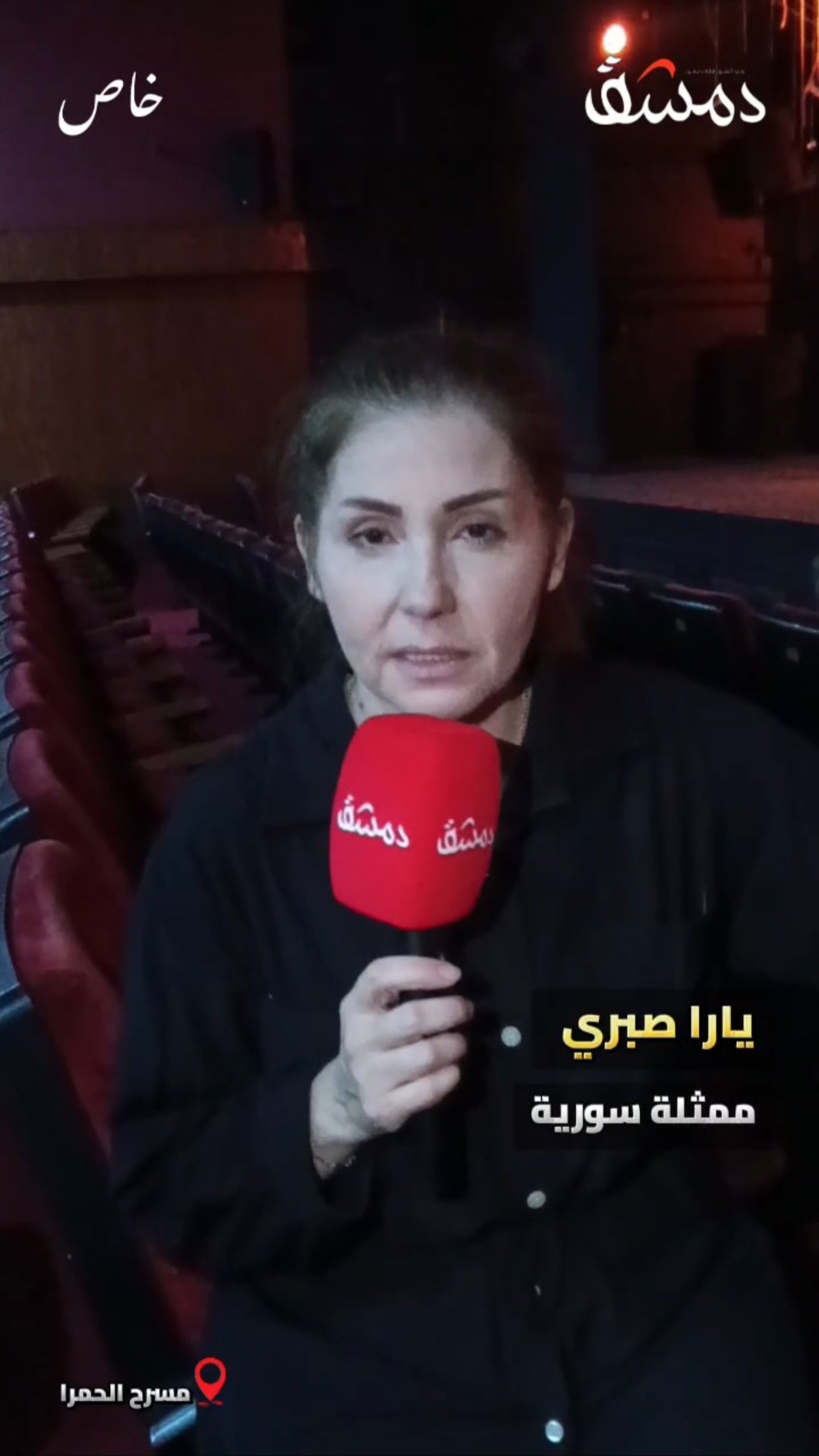
The Syrian actress Yara Sabri, who is participating in the play “Rehearsal for Judgment Day”, said that the issue of women survivors of detention cannot be reduced to a few words, stressing that they are “survivors of detention, but not fully survivors in life,” referring to the psychological, social, and economic impacts they continue to endure.
In a statement to Dimasheq, Sabri explained that many survivors face major challenges, most notably the lack of healthcare, psychological support, and economic empowerment, in addition to loss of employment or a breadwinner, which makes shedding light on their issue a responsibility that falls on both art and media.
She added that there are many examples of women who remained in Syria or left after their detention and were forced to rebuild their lives from scratch amid insufficient support, noting that what is currently provided to them does not match the scale of their sacrifices and resilience, which contributed to reaching a stage where it has become possible to discuss these issues.
Sabri emphasized that media interviews with survivors, despite their importance, are not enough, calling for media and cultural programs and initiatives that ensure continued attention to their suffering and needs.
She stressed that women survivors face a double challenge, as their suffering is not limited to what they endured inside detention centers, but extends to patriarchal societal attitudes in some cases, where some of them were subjected to stigma or rejection by their families or spouses, prompting many to leave the country and start new lives without any psychological or material support.
Sabri concluded by affirming that the issue of women survivors of detention must remain one of the most prominent topics in art, culture, and media, alongside other humanitarian issues that deserve attention.