


Damascus – Dimasheq
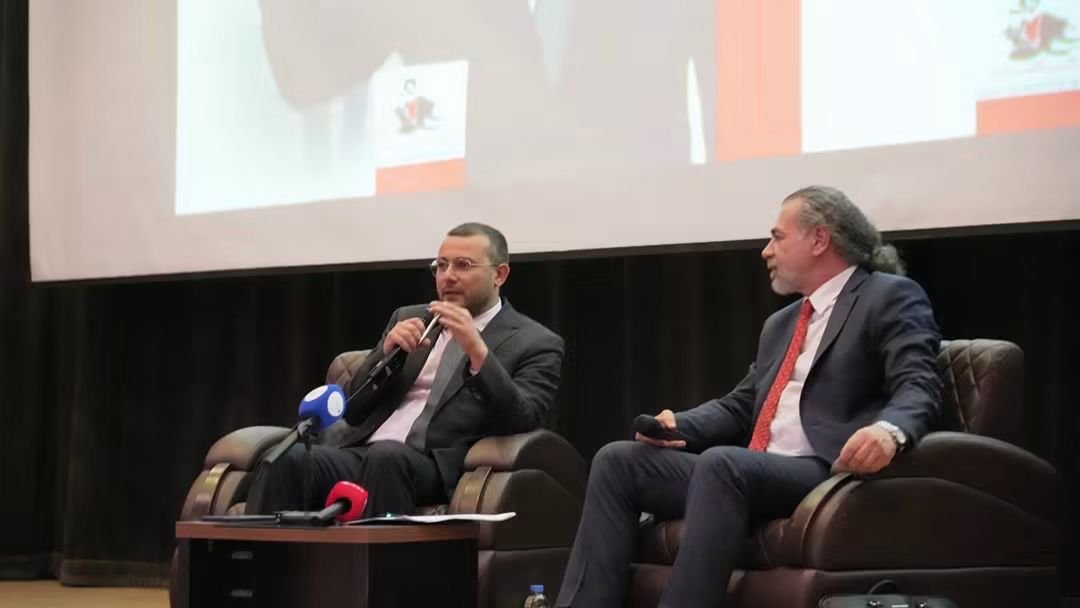
Lebanese writer and journalist Mounir Al-Rabih, Editor-in-Chief of Al-Modon newspaper, stated that the primary motivation behind writing his new book, The Secrets Behind Assad’s Fall and Ahmad Al-Sharaa’s Vision, was both personal and national, stemming from his connection to the Syrian cause and the region’s suffering under the former regime.
Speaking to Dimasheq on the sidelines of the book-signing event in Damascus, Al-Rabih explained that the book reflects on his experience of visiting the Syrian capital for the first time in many years following the fall of the Assad regime. He noted that understanding the Middle East is impossible without understanding Syria and the transformations it has undergone.
Al-Rabih said that the book seeks to provide an objective reading of the events Syria has experienced, leading to a new phase that, in his view, deserves a genuine opportunity to rebuild the state on the foundations of citizenship and a renewed social contract. He emphasized the importance of fulfilling Syrians’ aspirations to establish a modern democratic state in which all components of Syrian society participate in decision-making and the restructuring of political authority.
He added that his discussion of a “vision” stems from the belief that Syria and the wider region need new ideas centered on strengthening state institutions and establishing relations between countries based on mutual respect and equality, particularly between Lebanon and Syria, moving away from the patterns of dominance and dependency that characterized previous eras.
On the humanitarian level, Al-Rabih stressed the importance of celebrating the return of Syrians to their homeland after years of displacement and exile. He argued that the Syrian tragedy shares certain similarities with the Palestinian cause, making continued solidarity with the Syrian people, alongside the Palestinian people, a moral necessity.
He also called for solidarity with the Lebanese cause and efforts to facilitate the return of all displaced Lebanese citizens to their homes in the South, the southern suburbs of Beirut, and the Bekaa Valley. He emphasized that confronting projects of displacement or partition begins with rebuilding both the individual and the state while strengthening a sense of national belonging.
Al-Rabih concluded by affirming that the success of Syria’s new experience is a collective national responsibility that requires the participation of all Syrians in building a future founded on citizenship, democracy, development, and stability.