



By Dr. Abdul Qader Al-Mulla
In Syria, even a shoe shiner cannot practice his trade without the scrutiny of intelligence services and security agencies. How, then, can an artistic work claim neutrality and objectivity when the Syrian intelligence apparatus has long relied on art as a weapon comparable to explosive barrel bombs, deploying it in its fierce battle against the Syrian revolution?
All artistic productions created by the regime—or produced under its supervision—from 2011 onward served as essential auxiliaries to the regime and trustworthy allies in reinforcing and legitimizing its narrative. This was achieved either directly or through the manipulation of dramatic storylines, even in works that appeared social or emotional in nature. Historical dramas, too, were rarely spared from the imposition of allegories intended to strengthen the regime’s version of events. Any artistic or cultural work that failed to meet this condition simply had no chance of being produced within Syria.
The regime assembled brigades of artists, the most prominent of which was led by Najdat Anzour. It provided them with full support and protection to carry out their mission of distorting reality, reversing facts, and transforming the perpetrator into the victim. Nearly all regime-aligned artists followed Anzour’s example, and Laith Hajjo was no exception. In recent years, he directed television series that attempted to project an image of neutrality, such as We Will Return Shortly (San‘oud Ba‘da Qalil), yet their underlying message consistently served the same one-sided front that regime artists had opened against the revolution from their filming locations.
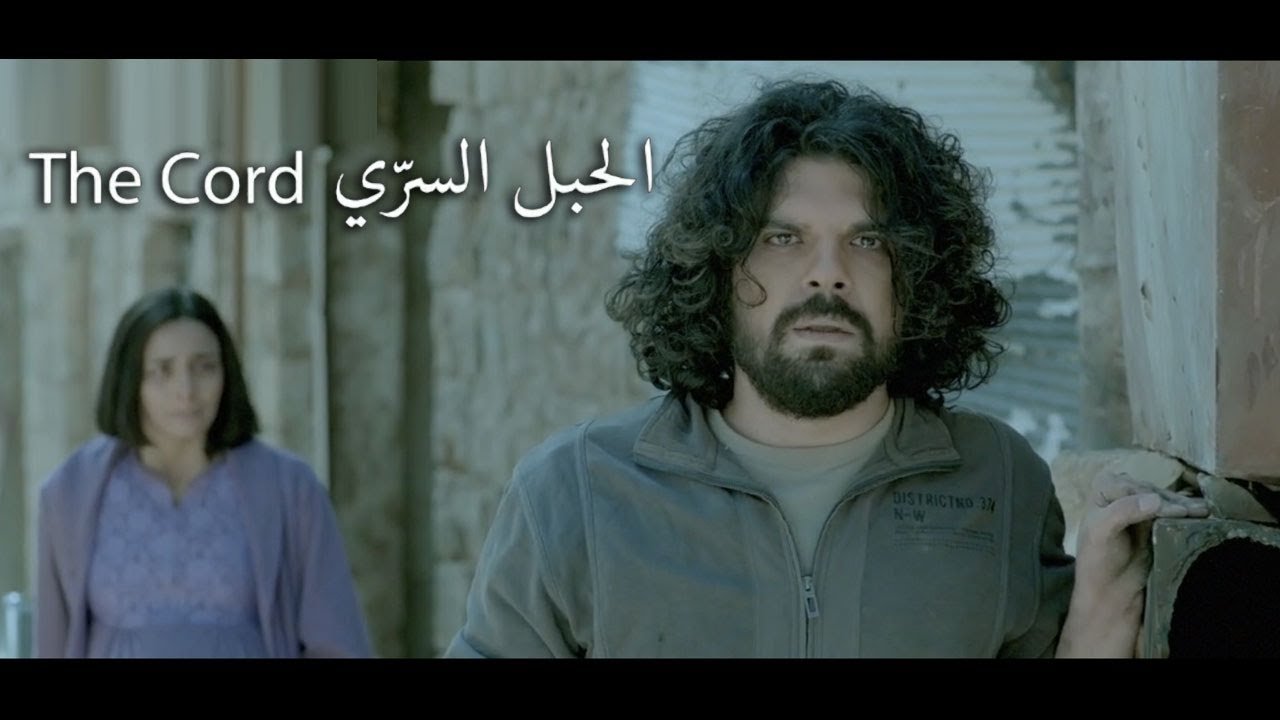
Today, Hajjo carries his new film, The Umbilical Cord (Al-Habl Al-Surri), written by Rami Koussa and funded—alongside ten other films—by the European Union as part of its support for civil society initiatives. He presents it in various world capitals as a testimony that the author regards as false, seeking new artistic acclaim upon the ruins of his devastated homeland, his displaced people, and the blood of millions who sacrificed in pursuit of a new Syria. In all the killing, destruction, devastation, and profound social fragmentation that have marked the Syrian tragedy, Hajjo appears to have found little more than an opportunity for artistic and financial success and for cultivating closer ties with the authorities responsible for killing and displacement—particularly following his divorce from the director of Asma al-Assad’s office.
Hajjo does not limit himself to artistic presentation alone. He conceals himself behind a supposedly humanitarian vision in much the same way a killer hides behind his fingers. He seeks to appear as the neutral witness who stands with the oppressed citizen regardless of the oppressor and opposes killing regardless of the killer. Yet he conveniently overlooks the fact that his name invariably appears at the top of the guest lists for Bashar al-Assad’s meetings with artists and for official invitations to various state-sponsored occasions.
In his attempt to demonstrate neutrality, Hajjo chooses a Syrian area suffering from the ravages of “war.” In his testimony, however, he shows little interest in identifying the parties to the conflict or clarifying who is fighting whom. Instead, he focuses on the effects of the conflict on ordinary people who possess no political affiliation and are not participants in the struggle.
There is a devastated neighborhood and ordinary people trying to survive. Yet a sniper pursues them relentlessly, denying them every possible means of life.
To heighten the dramatic impact of the story, Hajjo relies on a deeply personal humanitarian situation—one that stands in complete contrast to the culture of death that has dominated the Syrian scene over the previous nine years. In doing so, he seeks to portray himself as a defender of life. The film’s protagonist is a woman on the verge of giving birth. She lives with her husband in a ruined district besieged by a sniper who watches the residents of the neighborhood and prevents them from leaving their homes, even to cross the street to the other side.
The residents endure all the pressures resulting from the sniper’s pursuit. They refrain from going outside and exchange food with their neighbors using a horizontal pulley system. Eventually, however, the critical moment arrives. The pregnant woman must cross the street to seek assistance from neighbors in delivering her baby. Yet the murderous sniper—resentful, life-hating, and seemingly killing for the sake of killing alone—refuses even this humanitarian exception.