


Dissolution of the General Secretariat for Political Affairs: What About Restructuring?
Al-Modon
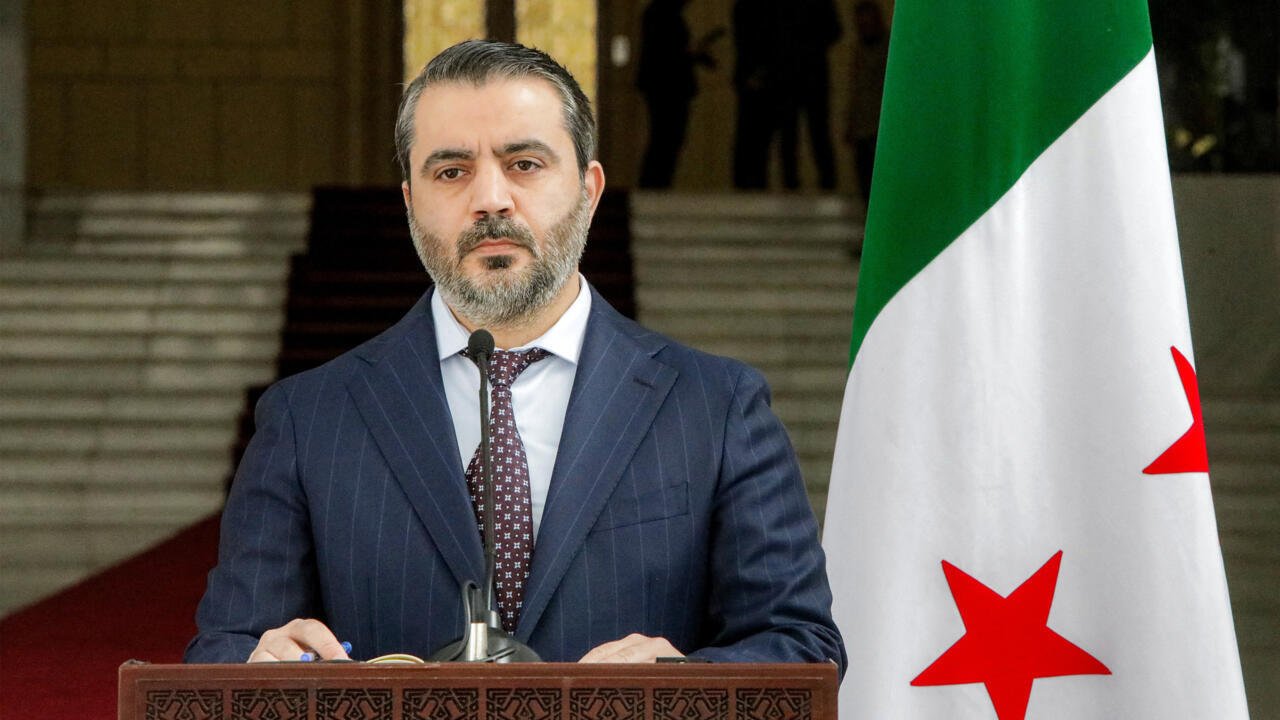
Less than fourteen months after its establishment amid considerable controversy, the General Secretariat for Political Affairs within the Syrian Ministry of Foreign Affairs has reportedly received an internal notification of its dissolution. The decision was issued by Foreign Minister Asaad al-Shaibani, according to exclusive information obtained by Al-Modon from a source within the Secretariat.
From Establishment to Dissolution
On 27 March 2025, al-Shaibani issued Decision No. (53), mandating the formation of the General Secretariat for Political Affairs as part of the administrative structure of the Ministry of Foreign Affairs and Expatriates. The decree outlined its mandate in broad and comprehensive terms: overseeing the management of political activities and events within Syria, and contributing to the formulation of general policies and plans related to political affairs.
However, what drew the most attention was the clause concerning assets: the repurposing of the assets of the Arab Socialist Ba’ath Party and other national parties in service of national and political objectives.
From the outset, this clause revealed the nature of the file the Secretariat would oversee—not merely organizing political life, but also assuming control over the material and organizational legacy of the Ba’ath era and redirecting it. This raised fundamental questions about the boundary between transitional management of party heritage and the creation of a new instrument for controlling the public sphere.
More Than an Administrative Issue
The establishment of the Secretariat sparked widespread debate across political, civil, and societal circles. Opinions were divided between those who opposed it from the outset—fearing a return to past practices and state domination of political life—and those who advocated giving it a chance before passing judgment.
However, the following months did little to allay these concerns; rather, they accumulated practical evidence reinforcing the critics’ position.
In July 2025, the Secretariat appointed the central council of the Syrian Bar Association after dissolving the interim council—a move that prompted explicit comparisons to the former Ba’ath Party’s mechanisms of controlling professional unions.
For many observers, it became increasingly evident that the Secretariat was assuming the role of a party-state apparatus in the “new Syria.” Notably, one of its first actions after its announcement was to take over the headquarters of the Ba’ath Party, which had been officially dissolved.
What proved even more controversial than its actions was what the Secretariat did not disclose: it failed to publish its program, objectives, role, or internal regulations; it did not open membership; and it did not hold a single public meeting in any governorate. An entity exercising broad powers from within the structure of the Ministry of Foreign Affairs without publicly defining itself constitutes, in itself, a governance dilemma lacking precise legal classification.
The risk lay in the fact that the Secretariat was not a declared political party subject to accountability, but rather an entity embedded within the Ministry of Foreign Affairs, effectively evolving into a quasi-autonomous political enclave. This became particularly evident when its influence extended into educational institutions: it emerged that a circular issued by the presidency of the University of Latakia—prohibiting any gathering of a political or social nature without prior approval—was merely one link in a chain of directives originating from the Secretariat and disseminated through provincial governors.
The Foundational Question
A deeper issue precedes all of the above, relating to the procedural legitimacy of the Secretariat’s very establishment. What does it mean for a directorate within the Ministry of Foreign Affairs to oversee the organization of political activities within the country, when such activities are presumed to take place within a free political sphere? This is not merely a theoretical concern; the mandate to “formulate general policies and plans in political affairs” implicitly encroaches upon the prerogatives of the executive branch in its relationship with political parties and civil society.
What Does the Decision Mean?
The dissolution cannot be understood in isolation from the context in which the Secretariat was created. If its establishment was intended to respond to the requirements of a transitional phase and to manage the Ba’ath legacy, then its sudden dissolution raises an inverse question: did it fulfill the purpose for which it was founded? Or did mounting criticism and public pressure drive its termination before it could become a political liability for the transitional government?
The most pressing question remains unresolved: where will the files and powers previously held by the Secretariat go, and who will inherit the Ba’ath assets it had assumed control over? The answers to these questions alone will determine whether this decision represents a genuine course correction or merely a cosmetic change.