


Dimasheq – News
The Saudi Heritage Commission has announced a new archaeological discovery considered one of the most significant findings related to the history of the Arabian Peninsula. The discovery was made as part of the Commission’s ongoing archaeological survey and documentation projects at several historical sites across the Kingdom.
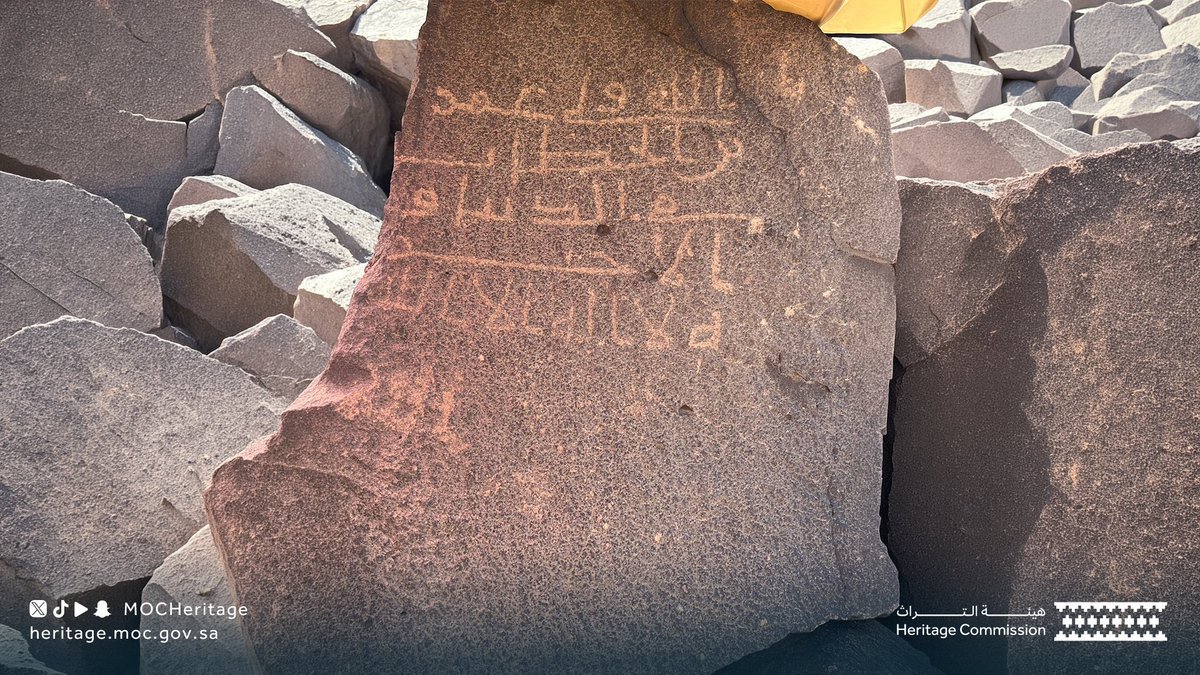
The Commission revealed the discovery of a large collection of rock inscriptions and engravings dating back to different historical periods. Among them is an early Islamic inscription attributed to the second Rashidun Caliph, Umar ibn Al-Khattab, which reads: “Allah is the protector of Umar ibn Al-Khattab in this world and the Hereafter.” The inscription is considered particularly significant due to its historical and scholarly value, offering insight into the early Islamic era.
According to the Commission, the discoveries include 461 Islamic inscriptions dating to various stages of early Islamic history, as well as 34 Thamudic inscriptions representing part of the written heritage of ancient Arab civilizations that inhabited the region before Islam. The findings also include 1,259 rock drawings depicting scenes of daily life, the natural environment, and human activities that characterized the region throughout different historical periods.
This discovery highlights the rich cultural and historical heritage of the Kingdom and underscores the importance of rock inscriptions and engravings as historical records documenting the cultural, social, and religious transformations that took place across the Arabian Peninsula over many centuries.
The Commission emphasized that these discoveries contribute to expanding knowledge of the region’s history, support scientific research and archaeological documentation efforts, and further showcase the Kingdom’s cultural significance as home to a human heritage that spans thousands of years.