

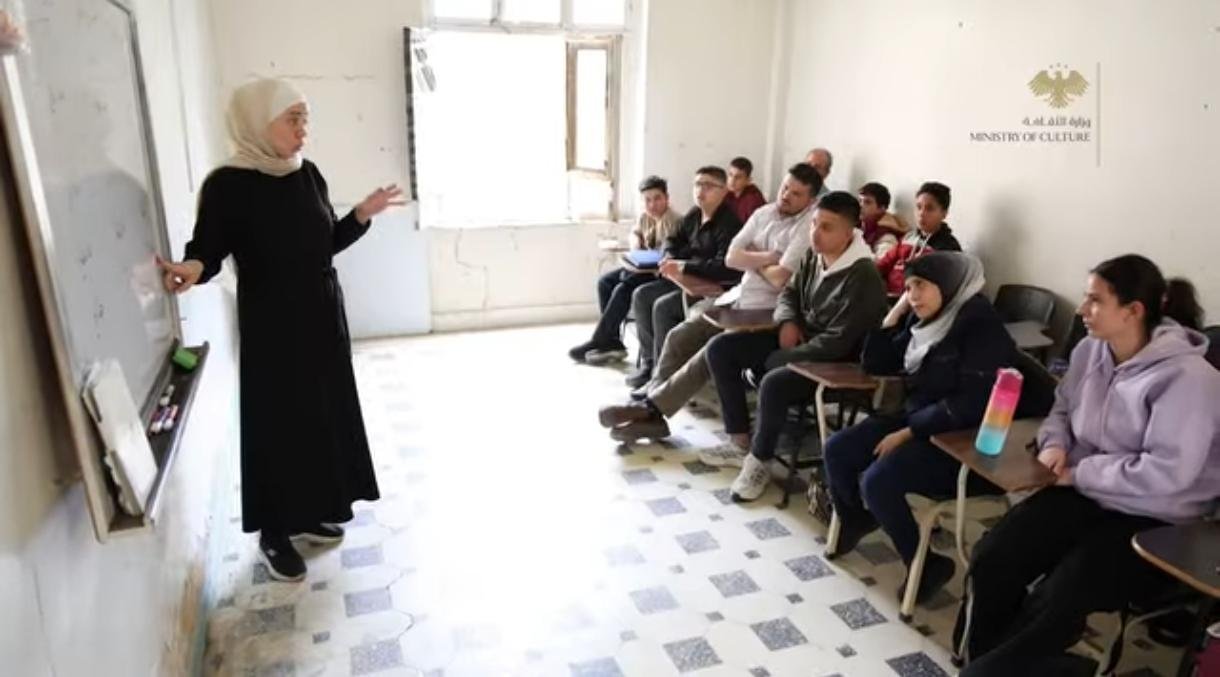
The Ministry of Culture has announced the launch of the National Electronic Portal for Adult Education, a step aimed at facilitating learner registration and enhancing access to educational programs designed for various age groups who did not have the opportunity to receive formal education.
The adult education program is based on two integrated pillars. The first is lifelong learning, which focuses on providing high-quality content aligned with international standards without age restrictions, targeting individuals beyond compulsory education age. The second pillar focuses on cultural development and sustainable empowerment, strengthening the link between educational outcomes and labor market needs.
The Ministry emphasized that its programs are not limited to basic literacy but also include digital, functional, and civic literacy, in line with global transformations in this field. Programs have been divided into five levels, with the final level focusing on vocational training and directly connecting trainees to the labor market.
As part of ongoing development efforts, relevant authorities are working on preparing new educational curricula under the supervision of leading academics. These curricula will be reviewed and evaluated by universities and specialized professors before being officially adopted.
In terms of figures, the number of beneficiaries from adult education services last year reached 1,740 female participants and 596 male participants, while cultural development programs included 596 trainees. The new plan aims to expand the number of beneficiaries to 15,830 in adult education and 4,000 in cultural development.
Through these initiatives, the Ministry seeks to build an active individual within society, equipped with the skills necessary to contribute to economic and social development, not merely to acquire basic reading and writing skills.