


Damascus News Platform ـ News ـ Damascus
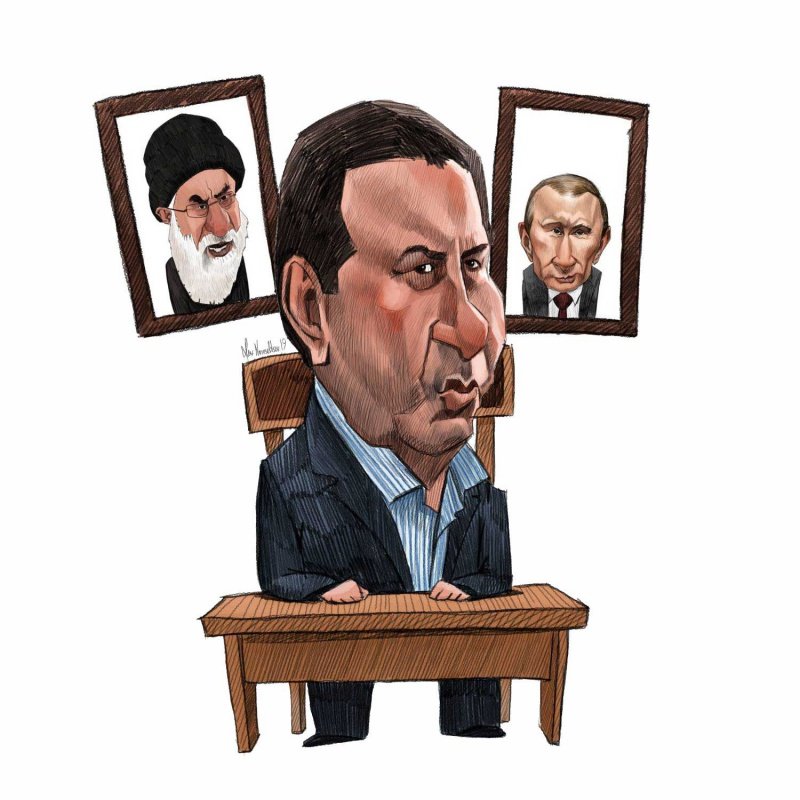
Major General Muhammad Mohla: A figure in the struggle over Syria
Fares Al-Dhahabi
Major General Muhammad Mohammed, the head of the Syrian Military Intelligence Branch who was recently dismissed from his post, has often been seen as one of the most prominent officers strongly supportive of the Iranian project. During his long service in the Republican Guard and the Political Security Branch, he developed close relations with Iranian military commanders. This relationship continued for a long time until Mohla, without prior warning, shifted his political and organizational allegiance from the Iranian camp to become one of Russia’s key assets in the Syrian arena.
This comes amid the ongoing turmoil in Syria over recent years, in the context of a complex struggle for influence between regional and international powers inside the country, following the decline of armed opposition control and the return of large areas to Syrian government control. While many believed the war had ended, the country has continued to experience tension, division, and hidden conflicts even among allies themselves.
Fierce division of the “cake”
What happened after ceasefire agreements was not the end of the conflict, but the beginning of a new phase titled the “division of the Syrian cake.” The states allied with the Syrian government, primarily Russia and Iran, began to openly compete for influence within Syrian state institutions—from the army and security services to the economy and reconstruction.
This competition was no longer limited to control over territory, ports, or airports, but extended to dominance over security and military agencies. For decades, the former Soviet Union worked to build influence within the Syrian army through military and educational agreements, while Iran later entered the scene strongly, especially after 1994, as preparations began for Bashar al-Assad’s succession.
Over the years, Iranian influence expanded within Syrian state institutions, taking advantage of the conditions of war, while Russia later began attempting to reduce this influence and reshape the balance of power within the Syrian system.
Russian–Iranian conflict inside Syria
Information from inside Syria indicates a sharp conflict between Russian officer Alexander Zorin, one of the key architects of settlement agreements in Syria, and Quds Force commander Qasem Soleimani, as each side sought to expand its influence within the Syrian army and security apparatus.
In this context, the name of Major General Muhammad Mohla emerged prominently, especially after he shifted from the Iranian camp to the Russian one, becoming one of the most prominent security figures supported by Moscow.
Mohla had previously fought alongside Iran-backed militias and was associated with violations and operations described as massacres, which led to his inclusion on U.S., British, and Canadian sanctions lists.
Targeting Maher al-Assad’s men
After being appointed head of the Military Intelligence Directorate, Mohla began working directly with the Russians to weaken Iranian influence in southern Syria, particularly in areas near the Jordanian and Israeli borders.
With Russian backing, Mohla sought to reduce the influence of the Fourth Division linked to Maher al-Assad and Iranian militias, through security reshuffles and field operations in the Daraa province and the Hauran region.
As part of these moves, Mohla made a notable visit to southern Syria, during which he met with local elders, community figures, and former faction commanders, offering promises of prisoner releases and improved public services in exchange for cooperation in limiting Iranian influence.
He also supported, under Russian sponsorship, the idea of establishing the “Sixth Corps” to counter Iranian expansion in the south, which provoked anger among Iranian militias and their allies within the Syrian government.
Assassinations and security chaos
Simultaneously with Mohla’s activities, southern Syria witnessed a wave of assassinations and arrest campaigns targeting judges, activists, local leaders, and tribal figures, amid mutual accusations between Russians and Iranians over responsibility for the security chaos.
As the conflict between the two sides escalated, Mohla came under significant pressure, which eventually led to his sudden dismissal and replacement by Major General Kifah Melhem, amid signs of satisfaction from the pro-Iranian camp over this change.
Fragile sovereignty
The case of Major General Muhammad Mohla reveals the complexity of the internal struggle in Syria, where the country has become an open arena of competition between external powers, amid the absence of true sovereignty and the multiplicity of centers of influence within state institutions.
Between Russian and Iranian influence, Syrian security and military agencies have remained a battleground for settling scores and exchanging interests, while the repercussions of this struggle continue to shape the future of south14:15:39ern Syria and the broader national landscape.