


Damascus News Platform – News – Culture and Arts
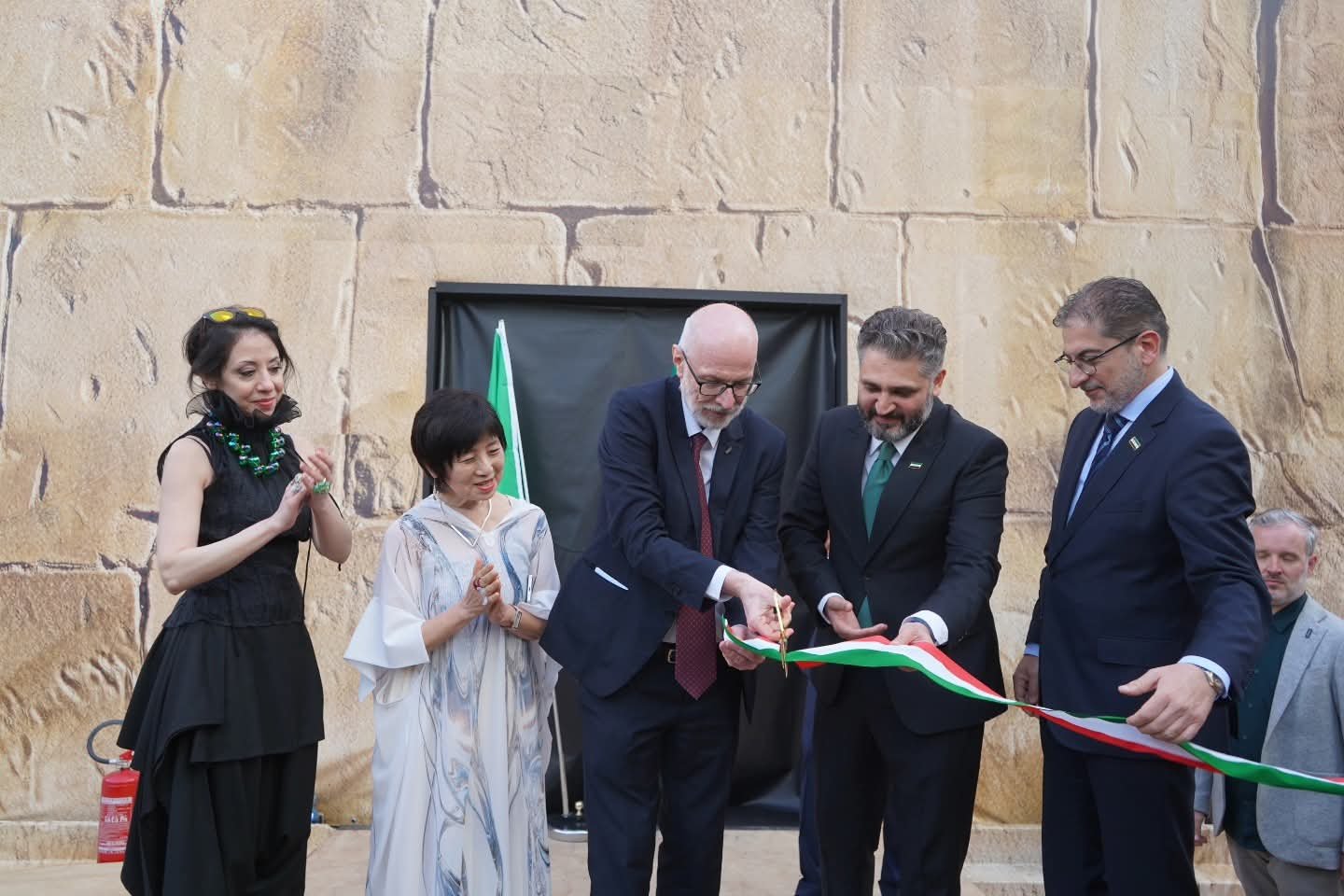
The Egyptian press has followed Syria’s participation in the Venice Biennale with great appreciation, highlighting it in several reports. The newspaper “Al-Alam Al-Now” stated in a report by Sherif Dawoud that the Syrian Minister of Culture, Mohammed Yassin Al-Saleh, inaugurated the national pavilion of the Syrian Arab Republic as part of the 61st edition of the Venice Biennale in Italy. The opening took place in a cultural setting rich with civilizational and symbolic significance, and was attended by the Chargé d’Affaires of the Syrian Arab Republic in Italy, Ambassador Hussein Al-Sabbagh, alongside a broad Arab and international presence that reflected the strong interest in Syria’s return to one of the world’s most important artistic and cultural platforms.
The newspaper added that the inauguration of the Syrian pavilion witnessed a notable attendance of Syrians who came from various parts of the world, in a scene infused with feelings of pride, nostalgia, and celebration. The pavilion turned into a collective space for the Syrian narrative, reclaiming its cultural presence from the heart of Venice, affirming that Syria, despite all that it has gone through, remains capable of rapid recovery and of regaining its natural position in the global cultural landscape.
The pavilion presented the artistic project “The Tower Mausoleum of Palmyra” by Syrian artist Sara Shamma, inspired by the civilizational heritage of the ancient city of Palmyra. The work offered a contemporary visual vision that combined painting, architecture, light, and sound within an interactive artistic experience carrying deep humanistic and cultural dimensions that evoke memory, identity, and belonging.
The “Palmyrene Royal Tower” appeared as if it were symbolically rising in the sky of Venice, carrying with it a civilizational narrative rooted deep in history, and a cultural message affirming that Syrian civilization is a renewed human project capable of addressing the world through the language of art and beauty.
The Syrian participation also reflected a state of Arab, international, and particularly Italian appreciation for Syria’s return to global cultural spaces, as the pavilion attracted wide attention from visitors, specialists, and critics alike. This scene highlighted the importance of cultural diplomacy as a bridge connecting East and West, and as a space for fostering wisdom, coexistence, and human dialogue beyond divisions.
In his opening remarks, the Syrian Minister of Culture emphasized that Syria’s participation in the Biennale represents an extension of the depth of the Syrian and Arab civilizational narrative, noting that culture has always been, and will remain, one of Syria’s most prominent civilizational faces and humanitarian messages to the world. He stressed that art is capable of rebuilding bridges between peoples and restoring a shared human meaning.
The newspaper “Al-Alam Al-Now” concluded its report by stating that Syria’s participation in the Venice Biennale confirms the country’s ability for rapid recovery and its renewed openness to international creative spaces, through a cultural presence that carries a deeply rooted civilizational identity and reintroduces Syria as a land of art, history, and humanity.