




Moqal Zuhour Oday
Political stability depends on maintaining a balance between political authority and civil society. Such a balance prevents political power from overwhelming society, while also preventing civil society from detaching itself from the political authority that is necessary for organizing and governing society.
In the Syrian case, we emerged from a situation in which the collapse of this balance — between society and the civil institutions and forces capable of representing it on the one hand, and political authority on the other — led to the domination of political power and the disappearance of the boundaries separating the state from society.
Under such circumstances, the influence of civil society diminishes and loses its role in political life, while the authority of the state expands and becomes free from any meaningful constraints. In other words, political authority moves away from the very foundation of governance as a social contract between ruler and ruled, toward another conception of rule based on tyranny and subjugation.
This concept of balance was addressed by Aristotle as early as the fourth century BC, when he argued that the stability of the political community depended on the existence of a strong middle class and a balanced distribution of power, and that the disruption of such balance inevitably led either to tyranny or to chaos.
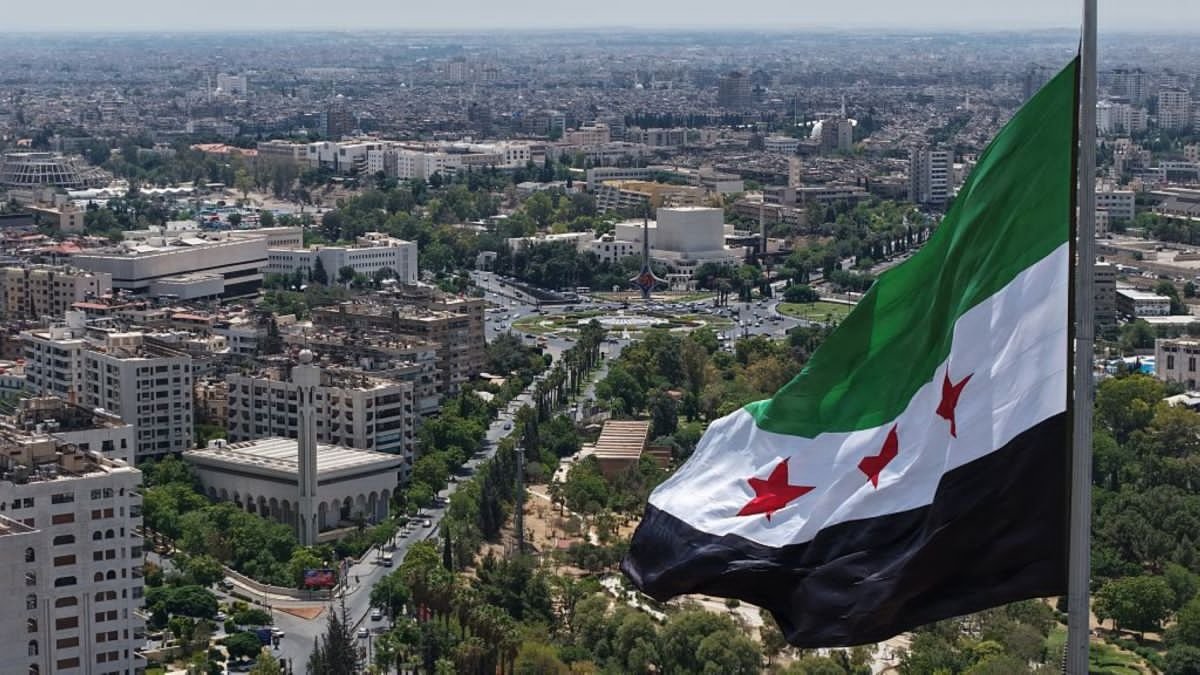
Syria has emerged from the hell of Assadist tyranny, yet it has done so with an urgent need to rebuild the relationship between the political authority brought about by change and Syrian society itself. To this day, insufficient attention has been devoted to how this relationship should be reconstructed — not from the narrow perspective of loyalty versus opposition, but from a broader and deeper perspective: namely, how to move toward the establishment of a civil society capable of acting as an intermediary force between the state and society, thereby achieving the balance that forms the basis of genuine and long-term social stability.
Political authority alone cannot achieve such balance, because it represents only one side of the equation. By its very nature, political power is concerned with preserving and consolidating its own existence, and it will naturally seek to expand its influence as far as possible whenever a vacuum exists between itself and society.
In reality, the political authority that emerged from political change is not responsible for this vacuum; rather, it is the legacy of six decades of authoritarianism, tyranny, and the excessive concentration of power during the former regime. Nevertheless, this vacuum creates an opportunity for political authority to expand at the expense of society so long as there is no intermediary force representing that society — namely, a vibrant civil society that has found the means to build its own independent institutions and structures.
Accordingly, genuine and lasting stability in post-regime Syria cannot be achieved without the establishment of an integrated and effective civil society capable of serving as an intermediary force between the state and society.
The French thinker Alexis de Tocqueville addressed this issue in his important work Democracy in America, where he argued that “civil associations, municipalities, trade unions, and local organizations form a barrier that prevents the overreach of the state and preserves social and political balance.”
The issue here is not one of confrontation or competition for power between political authority and civil society. Civil society cannot replace political authority. Rather, it is a matter of balance built upon two relatively independent poles, a balance that allows for the preservation of genuine and long-term stability for both society and the state.
It is a grave mistake for political authority to regard the process of building civil society as a threat. The opposite is true: the stability of society ensures the stability of political authority itself and reduces the need to resort to violence in order to impose control over society. The continued absence of balance between the state and society, caused by the weakness or absence of civil society, will inevitably push political authority toward authoritarianism and domination over society — even if such an outcome was neither initially intended nor desired.
Syria is in urgent need of building a comprehensive civil society in all its forms and institutions, including trade unions, voluntary and non-voluntary associations, labor federations, forums, political parties, and the press, provided that all of them remain free, independent, and separate from political authority. Political authority should facilitate the establishment of these institutions and view them not as rivals competing for power, but as partners in restoring balance within society for the benefit of both the state and society alike, and for the preservation of social peace and stability..
Note:
Alexis de Tocqueville (1805–1856) was a French historian and political thinker. His book Democracy in America is considered one of the most influential references in modern political thought.