

Dimasheq— News — Damascus
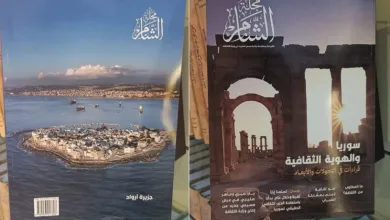
The Syrian Ministry of Culture in Damascus has released the first issue of Al-Sham magazine, a monthly publication dedicated to thought, literature, arts, and heritage, making it the first cultural periodical issued by the ministry in the post-liberation era.
In its introduction to the inaugural issue, the magazine stated that it is founded upon a vision that views culture as a vital force capable of producing meaning, preserving memory, rebuilding awareness, and strengthening the relationship between Syrians and their history, society, and future. The publication also described itself as an ambassador of Syrian culture and an open platform for major intellectual questions, aiming to restore the role of the written word in shaping consciousness and generating knowledge.
The editorial board explained that the choice of the name Al-Sham draws inspiration from the cultural legacy of the historic newspaper Al-Sham, which was edited by the renowned intellectual Muhammad Kurd Ali in 1897. The reference reflects the historical continuity of Damascus’s cultural influence and its ongoing presence through contemporary means.
The first issue celebrated Syrian culture through a featured dossier titled “Cultural Identity in Syria: A Reading of Transformations and Dimensions,” in addition to highlighting the most significant achievements of the Ministry of Culture during its first year of work in the new phase.
In the opening editorial, Minister of Culture Mohammad Yassin Saleh discussed what he considers the ministry’s key responsibilities in the coming period, including strengthening mutual understanding among Syrians, reducing misconceptions between different social groups, and confronting what he described as a “culture of plunder and spoils” that had been entrenched by decades of authoritarian rule.
The minister also emphasized the importance of giving due recognition to several prominent Syrian artistic and cultural figures who left a lasting impact on the cultural scene, including Nabil Maleh, Omar Amiralay, Haitham Haqqi, Hatem Ali, and Osama Mohammad.
For his part, Editor-in-Chief Taim Al-Haj Hazzah wrote in the issue’s editorial that the magazine aspires to become a monthly cultural space dedicated to thought, analysis, and documentation, while opening the door to revisiting Syrian memory and examining current cultural transformations.
The main dossier also included an interview with Deputy Minister of Culture Saad Naasan under the title: “We Inherited a Heavy Legacy, and Within One Year We Began Restoring Syria’s Genuine Cultural Role.”
The issue further featured a collection of studies and intellectual articles discussing questions of identity, memory, and Syrian culture, with contributions from a distinguished group of writers and researchers, including Ayman Yazbek, Ahmad Barqawi, Ibrahim Al-Jibeen, Ahmad Aybash, Fares Al-Zahabi, and Bashir Al-Bakr.
The dossier also contained articles by Tayseer Khalaf, Abdel Hakim Bashar, Ahmad Nazhar Saadou, Thaer Al-Zazou, Islam Abu Shakir, and Ali Safar. Their contributions explored themes ranging from national identity and cultural memory to restoring the value of Syrian history, as well as broader questions surrounding literature and belonging.
In addition, the issue included a variety of artistic and cultural materials covering theatre and visual arts, alongside contributions from young writers addressing a number of contemporary cultural concerns and intellectual anxieties.